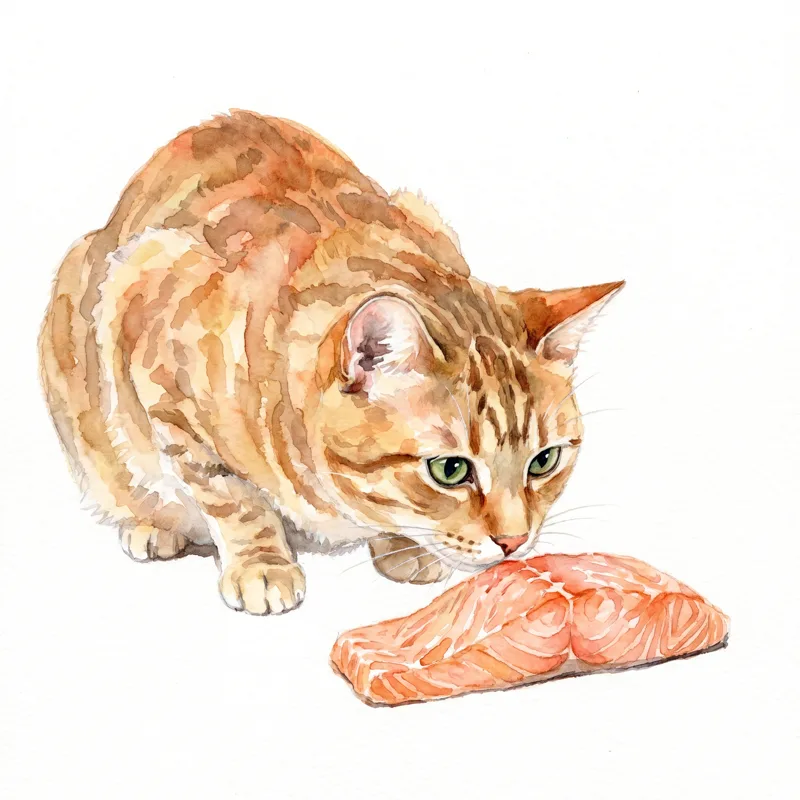
Caution: salmon requires care for your cat.
Cooked, plain, boneless salmon is safe for cats and nutritionally beneficial in small amounts. The two key dangers are raw salmon (parasite risk) and smoked or canned-in-brine salmon (dangerous sodium levels). Served correctly, salmon makes an excellent occasional treat or food topper — but it should never become the majority of a cat's diet.
Why Cooked Salmon Is Good for Cats
Cats are obligate carnivores — animal protein is not just preferred, it is biologically required. Salmon delivers on multiple fronts:
- High-quality protein — Complete amino acid profile including taurine, which cats cannot synthesize adequately on their own and must obtain from food
- Omega-3 fatty acids (EPA and DHA) — Support skin and coat health, reduce inflammation, and may support cognitive function in senior cats
- Vitamin B12 — Essential for nerve function and red blood cell production
- Selenium — An antioxidant mineral that supports thyroid function and immune health
- Potassium — Supports heart and muscle function
Key Nutritional Facts: Cooked Salmon (per 85g / 3oz serving, plain)
- Calories: 175 kcal
- Protein: 19g
- Fat: 10g
- Omega-3 (EPA + DHA): 1.8g
- Vitamin B12: 3.2mcg
- Selenium: 31mcg
- Potassium: 309mg
- Sodium: 52mg (plain cooked — much lower than smoked or canned)
The Raw Salmon Risk: Salmon Poisoning Disease
Raw salmon is one of the more serious food risks for cats and dogs. Here is why:
The mechanism:
- Raw Pacific salmon can carry a fluke (flatworm) called Nanophyetus salmincola
- This fluke may be infected with a rickettsial organism called Neorickettsia helminthoeca
- When a cat or dog eats infected raw salmon, the bacteria is released in the intestines
- This causes salmon poisoning disease — a potentially fatal systemic infection
Symptoms in cats (appear within 5–7 days of eating raw infected salmon):
- Lethargy and loss of appetite
- Fever
- Vomiting and diarrhea (sometimes bloody)
- Swollen lymph nodes
- Dehydration and rapid weight loss
Salmon poisoning is treatable if caught early — veterinarians typically prescribe antibiotics and supportive care. Left untreated, the fatality rate is high.
The fix is simple: Cook salmon thoroughly to an internal temperature of at least 63°C (145°F). This kills the fluke and any associated bacteria. Freezing salmon at -20°C (-4°F) for at least 7 days also eliminates the parasite risk, which is why sushi-grade fish labeled “previously frozen” is safer — but cooking remains the safest approach.
Smoked Salmon: Why It Is Dangerous
Smoked salmon is one of the worst forms you can give a cat:
| Product | Sodium Content (per 85g) |
|---|---|
| Plain cooked salmon | ~52mg |
| Canned salmon in water (regular) | ~300–400mg |
| Lox (cold-smoked salmon) | ~600–900mg |
| Hot-smoked salmon | ~500–700mg |
| Gravlax (cured salmon) | ~800–1,000mg |
A cat’s recommended daily sodium intake is around 42mg. A single slice of smoked salmon can contain 10–20 times that amount.
Effects of excess sodium in cats:
- Excessive thirst and urination
- Vomiting and diarrhea
- Lethargy
- In severe cases: tremors, seizures, and sodium ion poisoning
- Long-term: contributes to hypertension and kidney damage
Never give smoked, cured, pickled, or brined salmon to your cat in any amount.
Safe Salmon Serving Guide
| Form | Safe? | Notes |
|---|---|---|
| Baked plain (no seasoning) | Yes | Best option |
| Steamed plain | Yes | Retains most nutrients |
| Boiled plain | Yes | Easy to flake for cats |
| Grilled plain (no oil/seasoning) | Yes | Ensure no char, which contains carcinogens |
| Canned in water (no added salt) | Yes (small amounts) | Rinse before serving |
| Canned in brine or oil | No | Too high in sodium or fat |
| Raw | No | Parasite risk |
| Smoked / lox / gravlax | No | Dangerously high sodium |
| Salmon sushi | No | Raw fish risk; may contain other unsafe ingredients |
| Salmon skin | Caution | Safe if cooked plain, but high in fat — remove if seasoned |
| Salmon bones | No | Fine bones can splinter and cause choking or internal injury |
How Much Salmon Can Cats Eat?
Salmon should complement a complete cat food, not replace it:
| Cat Size | Frequency | Amount Per Serving |
|---|---|---|
| Small (under 3 kg / 7 lbs) | Once a week | 1 tablespoon flaked |
| Average adult (3–5 kg) | 1–2 times per week | 1–2 tablespoons flaked |
| Large cat (over 5 kg) | 1–2 times per week | 2 tablespoons flaked |
The 10% rule applies: Treats and supplemental foods including salmon should not exceed 10% of a cat’s daily caloric intake.
The “Tuna/Salmon Addiction” Problem
One of the most overlooked risks of feeding fish regularly to cats is behavioral food fixation. Cats imprint strongly on smells and textures, and fish has an especially potent smell due to its trimethylamine content.
Cats fed fish too frequently can develop a strong preference for fish and begin refusing other foods — including nutritionally complete cat food. This is sometimes called “finicky eating” but is actually a form of learned food aversion.
Signs your cat may be developing fish addiction:
- Refusing their regular cat food after being given fish
- Crying or begging persistently when fish smell is present
- Eating significantly less on days when fish is not offered
Prevention: Keep fish as an occasional treat (once or twice a week maximum), not a daily staple. Rotate with other high-value treats like plain cooked chicken or turkey.
Salmon vs. Other Fish for Cats
| Fish | Safe Cooked? | Key Notes |
|---|---|---|
| Salmon | Yes | High in omega-3; raw is risky |
| Tuna | Caution | Safe occasionally; avoid daily (mercury, thiamine issues) |
| Sardines (in water) | Yes | Good omega-3 source; choose low-sodium varieties |
| Cod | Yes | Lean white fish; good for cats watching calories |
| Tilapia | Yes | Lean and mild; low in omega-3 |
| Mackerel | Caution | Very high in fat; occasional only |
| Swordfish | No | Very high mercury; avoid |
| Shark | No | Very high mercury; avoid |
| Raw shellfish | No | Parasite and bacterial risk |
When to Avoid Salmon
- Cats with kidney disease (CKD) — Salmon is high in phosphorus, which must be restricted in cats with kidney disease. Always consult your vet first
- Cats with hyperthyroidism — Some research suggests regular fish intake may be associated with hyperthyroidism risk in cats; consult your vet
- Cats with pancreatitis — The high fat content of salmon can trigger pancreatitis flare-ups
- Cats on prescription diets — Any supplemental food, including salmon, can disrupt the balance of a veterinary prescription diet
Frequently Asked Questions
Can cats eat salmon skin?
Plain, cooked salmon skin with no seasoning or oil is safe in small amounts. However, salmon skin is high in fat, which can cause digestive upset or contribute to pancreatitis in cats prone to the condition. Remove the skin if the salmon was cooked with any seasoning, oil, or butter.
Can I give my cat salmon oil supplements instead?
Yes, salmon oil supplements designed for pets are a safe and effective way to deliver omega-3 benefits without the risks of raw fish or excess sodium. Look for products specifically formulated for cats with a clearly stated EPA/DHA content. Follow the dosage instructions on the product.
My cat ate a piece of smoked salmon. What should I do?
A very small amount of smoked salmon (a bite or two) in a healthy adult cat will likely cause nothing worse than digestive upset. Monitor for vomiting, excessive thirst, or lethargy. If your cat ate a significant quantity, contact your veterinarian — salt toxicity can develop quickly in small cats.
More Foods Your Cat Can and Cannot Eat
- Can My Cat Eat Tuna? — The daily feeding risk most owners overlook
- Can My Cat Eat Chicken? — The safest everyday protein for cats
- Can My Cat Eat Cheese? — Why dairy is a caution for most cats
- Can My Cat Eat Eggs? — A protein-rich treat when cooked properly
- Can My Cat Eat Chocolate? — Why it is extremely dangerous
References & Authoritative Sources
The information in this guide is informed by leading veterinary organizations and toxicology resources. For your pet's specific situation, always consult a licensed veterinarian.