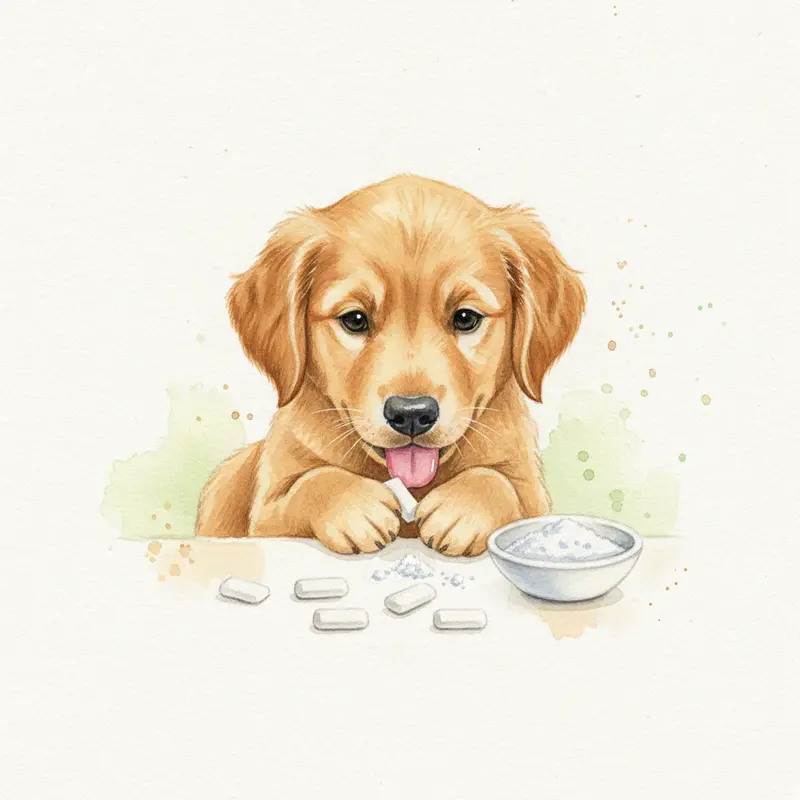
No, your dog should not eat xylitol.
Xylitol is a sugar-free sweetener that is extremely toxic to dogs. Even a small amount causes a sudden flood of insulin and a dangerous crash in blood sugar within minutes, and larger doses can cause liver failure. It hides in sugar-free gum, mints, some peanut butters, and toothpaste. No amount is safe. If your dog has swallowed anything containing xylitol, contact your veterinarian or an animal poison control line immediately — this is a medical emergency.
Why Xylitol Is So Dangerous to Dogs
Xylitol is a sugar alcohol used to sweeten “sugar-free” products. It is safe for people and even good for human teeth, which is exactly why it is everywhere. The danger is that a dog’s body reacts to it in a completely different way from ours.
In humans, xylitol is absorbed slowly and barely nudges insulin. In dogs, it is absorbed quickly and tricks the pancreas into thinking a huge load of sugar has arrived. The pancreas dumps a large amount of insulin into the bloodstream — and that insulin drives the dog’s actual blood sugar down hard. The result is hypoglycemia: a blood-sugar crash that can cause weakness, collapse, and seizures, and that can be fatal if it is not caught and treated.
That is the first and fastest danger. The second, at higher doses, is liver damage. Xylitol can cause death of liver cells (hepatic necrosis), which may lead to liver failure and bleeding problems. Worryingly, severe liver injury can happen without an obvious low-blood-sugar episode first, so a “normal” blood sugar does not mean your dog is in the clear.
This species difference is the whole story: the same little piece of gum that is harmless to you can poison your dog.
How Fast It Happens
Speed is what makes xylitol so frightening compared with many other toxins.
- Blood-sugar crash: often within 10 to 60 minutes of eating. With some chewing gums, the xylitol is released more slowly and the crash can be delayed up to 12 hours, so a dog that looks fine at first is not necessarily safe.
- Liver injury: can develop over the following 12 to 72 hours, sometimes even when blood sugar stayed normal.
Because the low-blood-sugar episode can come on suddenly and without warning, vets treat every known xylitol ingestion as time-critical. This is not a wait-and-see poison.
How Much Xylitol Is Toxic
Xylitol is dangerous in surprisingly small amounts, and the two dangers have two different thresholds:
- Hypoglycemia (blood-sugar crash): starts at roughly 0.1 gram per kilogram of body weight.
- Liver damage: starts at roughly 0.5 gram per kilogram of body weight.
The problem is that products vary enormously in how much xylitol they contain, and the amount is almost never printed in grams. A single piece of sugar-free gum can hold anywhere from about 0.3 to 1 gram of xylitol — which means that for a small dog, one or two pieces of gum can be a toxic dose.
| Dog weight | Approx. dose for blood-sugar crash | Approx. dose for liver injury |
|---|---|---|
| 5 kg (small — e.g. Chihuahua) | ~0.5 g (can be a single piece of gum) | ~2.5 g |
| 10 kg (small-medium) | ~1 g (1-2 pieces of gum) | ~5 g |
| 20 kg (medium) | ~2 g | ~10 g |
| 30 kg (large) | ~3 g | ~15 g |
These are the thresholds where harm begins, not safe amounts. The safe amount of xylitol for a dog is zero. Because you usually cannot know how much xylitol is in a given product, never try to calculate whether your dog ate “enough” — assume it did and call for help.
Key Nutritional Facts: Xylitol Toxicity Reference (Dogs)
- Blood-sugar crash (hypoglycemia): from ~0.1 g per kg body weight
- Liver injury (hepatic necrosis): from ~0.5 g per kg body weight
- Sugar-free gum: often 0.3-1 g xylitol per piece (varies hugely by brand)
- Onset of hypoglycemia: usually 10-60 minutes, can be delayed up to 12 hours with gum
- Liver failure can develop: 12-72 hours, sometimes without prior low blood sugar
- Species difference: xylitol triggers a big insulin surge in dogs but not in people
Where Xylitol Hides — The Products to Watch
Most xylitol poisonings are accidents: a dog grabs a handbag, a gum packet, or a jar that nobody thought of as “food.” Xylitol turns up in far more than gum:
- Sugar-free chewing gum and breath mints — the single most common cause of xylitol poisoning in dogs.
- Sugar-free candy, mints, and chocolates
- Some peanut butters and nut butters — those labelled “sugar-free,” “no sugar added,” or “keto.” This is especially dangerous because peanut butter is what people use to hide pills or stuff a Kong. Always read the jar.
- Toothpaste and mouthwash — including “dog-safe” claims that are not; use only toothpaste made for dogs.
- Sugar-free baked goods, puddings, jams, and syrups
- Protein bars, “keto” and “diabetic-friendly” snacks
- Chewable vitamins, gummy supplements, and some medications (especially liquid or chewable forms — check with your pharmacist)
- Nasal sprays, throat lozenges, and some allergy products
On a label, xylitol is not always called “xylitol.” Look also for “birch sugar,” “wood sugar,” “birch bark extract,” or the additive code “E967.” If a product is “sugar-free” and you cannot rule xylitol out, keep it well away from your dog.
Why “Sugar-Free” Doesn’t Always Mean Xylitol
This is the nuance that most quick answers skip, and it matters in a panic.
Not every sugar-free product contains xylitol. Many use erythritol, sorbitol, maltitol, stevia, sucralose, or aspartame instead. Of the sugar alcohols, xylitol is by far the most dangerous to dogs — erythritol, for example, does not cause the same insulin surge and is generally considered low risk. So a “sugar-free” label is a reason to check, not automatically a reason to panic.
The catch is that you genuinely cannot tell which sweetener is used without reading the ingredient list. If the label names xylitol (or birch/wood sugar or E967), treat it as a poison. If it clearly uses only other sweeteners, the xylitol risk specifically is low — though sugar-free sweets are still not a healthy treat. When the label is missing or unclear, assume xylitol and call your vet.
Symptoms of Xylitol Poisoning in Dogs
Signs can come on fast. Watch for:
Early (from the blood-sugar crash — minutes to a few hours):
- Vomiting (often the first sign)
- Sudden weakness or lethargy
- Wobbliness, stumbling, or trouble standing (ataxia)
- Trembling or shaking
- A “drunk,” disoriented look
- Collapse
- Seizures
Later (liver injury — 12-72 hours):
- Ongoing lethargy and loss of appetite
- Yellowing of the gums, skin, or whites of the eyes (jaundice)
- Black, tarry, or bloody stool, or unexplained bruising (a sign of bleeding problems)
A dog that suddenly becomes weak, wobbly, or collapses after being near gum, mints, or a sugar-free product is an emergency until proven otherwise — get to a vet immediately.
What to Do If Your Dog Eats Xylitol
- Act immediately — do not wait for symptoms. The crash can be sudden.
- Remove any remaining product and make sure no other pet can reach it.
- Call your veterinarian or an animal poison control line right away. Describe the product, how much you think was eaten, and when.
- Do not make your dog vomit at home unless your vet tells you to. A dog that is already weak, wobbly, or low on blood sugar can inhale the vomit — and inducing vomiting is not always the right move. Let the professionals guide you.
- Do not give sugar at home unless instructed. Vets sometimes advise rubbing a little honey or corn syrup on the gums of a wobbly dog on the way in, but do this only under their direction and never pour liquid into the mouth of a dog that is seizing or unconscious.
- Keep the packaging so the vet can estimate the dose.
Emergency contacts:
- Your local emergency veterinary clinic
- ASPCA Animal Poison Control Center: (888) 426-4435 (fee may apply)
- Pet Poison Helpline: (855) 764-7661 (fee may apply)
Veterinary Treatment
There is no antidote for xylitol — treatment is about catching the blood-sugar crash and protecting the liver:
- Decontamination — if the dog is alert and ingestion was very recent, the vet may induce vomiting. Activated charcoal binds xylitol poorly, so it is not always used.
- Blood-sugar monitoring — dogs are usually hospitalized and have their glucose checked repeatedly for 12 to 24 hours (longer with gum), because the crash can be delayed.
- IV dextrose (sugar) — a sugar drip to hold blood glucose up until the insulin surge passes.
- Liver protection and monitoring — IV fluids plus liver-support medications (such as SAMe, silymarin/milk thistle, and N-acetylcysteine), with liver values and clotting rechecked over 2 to 3 days at higher doses.
Dogs that are treated quickly, before a severe blood-sugar crash or liver failure sets in, generally do very well. The outlook is far more serious once liver failure or bleeding problems develop — which is exactly why speed matters so much.
Prevention
Xylitol poisoning is almost always preventable:
- Keep gum, mints, and sugar-free sweets in closed drawers or high cupboards — never in a bag, coat pocket, or bedside table a dog can reach.
- Read every peanut butter and nut butter label before giving it to your dog or using it for pills or a Kong. Keep a dog-safe, xylitol-free jar separate from any “sugar-free” one.
- Use dog toothpaste only — never human toothpaste or mouthwash.
- Check labels on chewable vitamins, supplements, and medications, and ask your pharmacist about sugar-free or chewable products.
- Warn family, visitors, and children that gum and mints are dangerous to the dog, and never leave a handbag on the floor.
- Store “keto,” “diabetic,” and “sugar-free” foods out of reach, and secure the bin.
Safe Treat Alternatives for Dogs
If you want to reward your dog, skip anything sugar-free and reach for these instead:
- Carrot sticks — crunchy, low-calorie, and dog-safe
- Blueberries — antioxidant-rich training treats
- Apple slices — remove the core and seeds
- Plain cooked chicken or turkey — no salt, onion, or seasoning
- Plain, xylitol-free peanut butter — check the label first
- Commercial dog treats — formulated to be safe and complete
Fruitables Whole Jerky Dog Treats - Turkey & Sweet Potato
Real whole jerky treats made with turkey and sweet potato — a safe, naturally sweet-tasting reward with no xylitol, no artificial sweeteners, and no added sugar. A healthy way to treat your dog instead of risking a sugar-free human snack.
$9.99 View on AmazonAs an Amazon Associate, we earn from qualifying purchases.
Frequently Asked Questions
My dog ate one piece of sugar-free gum. Is that an emergency?
Treat it as one. A single piece of gum can contain up to about 1 gram of xylitol, which is enough to crash the blood sugar of a small or medium dog. Because you usually cannot tell how much xylitol a given gum contains, call your vet or a poison control line right away rather than waiting to see if symptoms appear.
How quickly will my dog show symptoms?
The blood-sugar crash usually begins within 10 to 60 minutes, but with some chewing gums it can be delayed for several hours — up to around 12. Liver injury can develop over the next one to three days. This delay is exactly why vets want to monitor the dog rather than send it home as soon as it “seems fine.”
Is xylitol in peanut butter?
It can be. Some peanut and nut butters sold as “sugar-free,” “no sugar added,” or “keto” use xylitol. Since peanut butter is a favourite way to give pills or fill a Kong, this is a real-world danger. Always read the label, and keep any xylitol-sweetened jar out of the house or clearly separated from your dog’s jar.
Is xylitol toxic to cats too?
The classic, well-documented danger is in dogs. Current evidence suggests cats are far less sensitive to xylitol’s insulin effect, but research is limited and cats rarely eat sweet foods anyway. To be safe, keep xylitol products away from all pets and call your vet if your cat eats any.
Are other sugar alcohols like erythritol dangerous?
Xylitol is the dangerous one. Erythritol, sorbitol, and stevia do not trigger the same insulin surge in dogs and are generally considered low-risk, though sugar-free sweets are still not a healthy treat. The problem is you cannot tell which sweetener a product uses without reading the label — so when it is unclear, assume xylitol and check with your vet.
More Foods Your Dog Can and Cannot Eat
Wondering what else is safe for your dog? Check out our other dog food safety guides:
- Can My Dog Eat Grapes? — Another food that causes sudden, serious harm
- Can My Dog Eat Chocolate? — A classic toxic food, dangerous by dose
- Can My Dog Eat Peanut Butter? — Safe only if it is xylitol-free
- Can My Dog Eat Apples? — A safe snack with one part to remove
- Can My Dog Eat Avocado? — The truth about persin
References & Authoritative Sources
The information in this guide is informed by leading veterinary organizations and toxicology resources. For your pet's specific situation, always consult a licensed veterinarian.