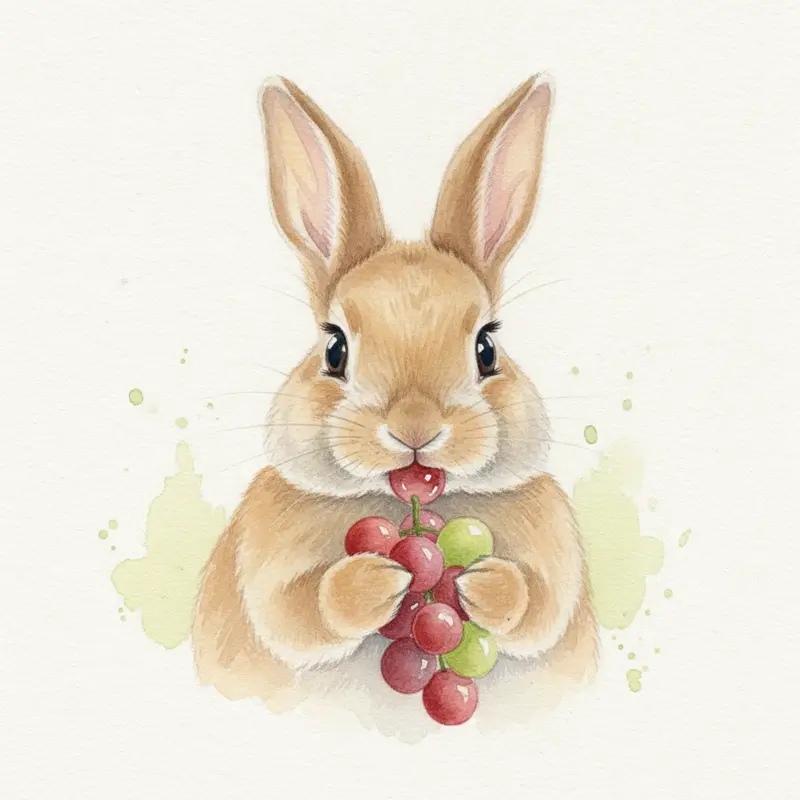
Caution: grapes requires care for your rabbit.
Grapes are safe for rabbits and most bunnies love them — and unlike dogs, rabbits are not poisoned by grapes. The caution rating is about sugar, not toxicity. Grapes are one of the sweeter fruits, and a rabbit's gut is built for high-fiber hay, not sugary treats. Offer just 1-2 grapes once or twice a week, and never as a replacement for hay and greens.
Safe for Rabbits, Deadly for Dogs
If you have a dog as well as a rabbit, you have probably heard that grapes are dangerous — and that is absolutely true for dogs. It is natural to worry that the same applies to your bunny. The good news: grapes affect the two species completely differently.
- Dogs — Grapes and raisins cause acute kidney failure in dogs. The toxic compound (identified as tartaric acid) can be fatal even in small amounts. Dogs should never eat grapes.
- Rabbits — There are no documented cases of grape toxicity in rabbits. Rabbits can eat small amounts of grape safely, and the tartaric-acid mechanism that harms dogs does not appear to affect them.
So why the caution rating? Because “not toxic” does not mean “eat freely.” For rabbits, the real issue with grapes is their high sugar content and the delicate nature of the rabbit digestive system. A grape is essentially a little packet of sugar and water — fine as a rare treat, harmful if it becomes a habit.
Key Nutritional Facts: Red Grapes (per 100g)
- Calories: 69 kcal
- Sugar: 16g (very high for rabbits)
- Fiber: 0.9g
- Vitamin C: 3.2mg
- Vitamin K: 14.6mcg
- Potassium: 191mg
- Water: 81%
The Sugar Problem
A rabbit’s digestive system is designed to process high-fiber, low-sugar foods like hay and leafy greens. Their gut relies on a delicate balance of bacteria in the cecum to ferment fiber. When too much sugar arrives, that balance is disrupted. At 16g of sugar per 100g, grapes are among the sweetest fruits — noticeably higher than strawberries (about 5g) — so they demand extra restraint. Excess sugar can cause:
- Cecal dysbiosis — Disruption of the bacterial balance in the cecum, leading to soft, smelly droppings and mushy cecotropes
- GI stasis — A potentially life-threatening condition where the gut slows down or stops entirely
- Obesity — Rabbits gain weight easily, and grapes are calorie-dense for their size
- Dental problems — Sugar promotes the bacterial growth that contributes to tooth decay
- Selective eating — A rabbit that fills up on sweet treats may start refusing hay, which is extremely dangerous for gut and dental health
The low fiber content (0.9g per 100g) is worth noting too. Grapes provide almost none of the fiber that a rabbit’s gut depends on, which is another reason they can never be more than a tiny occasional treat.
How Many Grapes Can a Rabbit Eat?
Grapes should be a rare treat, not a regular food. Because they are higher in sugar than most fruits, keep portions on the smaller end.
| Rabbit Size | Grape Portion | Frequency |
|---|---|---|
| Small (under 2 kg) | 1 small grape, halved | Once a week |
| Medium (2-3.5 kg) | 1-2 grapes | 1-2 times per week |
| Large (over 3.5 kg) | 2 grapes | 1-2 times per week |
Never give grapes on the same day as other sugary fruits like banana or strawberries — the sugar adds up quickly. Think of a grape as candy for your rabbit: a small, occasional indulgence.
How to Serve Grapes to Your Rabbit
Preparation:
- Wash thoroughly. Grapes consistently appear on the “Dirty Dozen” list of most pesticide-contaminated produce. Buy organic if you can, or soak and rinse well.
- Cut them open. Halving or quartering the grape reduces choking risk and lets you check for seeds.
- Remove seeds if the grapes are not seedless. Seeds are not toxic but can be a minor choking hazard for smaller rabbits.
- Leave the skin on. Grape skin is safe and contains most of the fruit’s fiber and antioxidants.
- Offer at room temperature and remove any uneaten grape from the enclosure within a few hours to prevent spoilage.
First-time introduction:
- Start with a tiny piece — about half of one small grape.
- Wait 24-48 hours and monitor your rabbit’s droppings.
- If stools stay normal and firm, you can offer a normal small portion next time.
- If you notice soft stools, mushy cecotropes, or reduced appetite, stop offering grapes.
Can Rabbits Eat Grape Leaves and Vines?
Yes — and they are actually a better option than the fruit. Grape leaves are low in sugar and high in fiber, making them a safe, nutritious addition to a rabbit’s leafy green rotation. If you have access to organic, unsprayed grapevines, the leaves and young vines are safe for rabbits in normal green-sized portions. As with any new green, introduce them gradually and make sure they have not been treated with pesticides or fungicides.
The 80/15/5 Rule for Rabbit Diet
To keep grapes in proper perspective, remember the golden ratio for rabbit nutrition:
- 80% hay — Timothy hay (or orchard grass, meadow hay) should be the overwhelming majority of your rabbit’s diet, available at all times
- 15% fresh leafy greens — Romaine lettuce, cilantro, basil, parsley, bok choy, grape leaves, and similar greens
- 5% pellets and treats — High-quality timothy hay pellets plus small amounts of fruit like grapes
Grapes fall into that tiny 5% treat category. They should always be a treat, never a meal.
Warning Signs After Eating Grapes
Monitor your rabbit after offering grapes for the first time or after a larger-than-usual portion:
- Soft or mushy droppings — A sign the sugar is disrupting gut bacteria
- Sticky cecotropes — The soft droppings rabbits normally re-eat; if they are abnormally mushy or left uneaten, the gut may be struggling
- Reduced hay consumption — If your rabbit eats less hay while holding out for treats
- Diarrhea — True watery diarrhea is a medical emergency in rabbits, especially young ones
- Bloating — A tight, distended belly can indicate gas or GI stasis
- Lethargy or teeth grinding — Signs of pain or discomfort
If you notice diarrhea, bloating, or your rabbit stops eating and producing droppings, seek veterinary care immediately. These can be signs of GI stasis, which is life-threatening.
Oxbow Essentials Adult Rabbit Food
The foundation of a healthy rabbit diet. Made with timothy hay and fortified with essential vitamins and minerals. Pair with unlimited hay and fresh greens for complete nutrition — and keep sugary treats like grapes to a minimum.
$24.99 View on AmazonAs an Amazon Associate, we earn from qualifying purchases.
Frequently Asked Questions
Can rabbits eat raisins?
Raisins are not toxic to rabbits, but they are dried grapes with the sugar concentrated even further — a single raisin packs far more sugar per gram than a fresh grape. If you offer raisins at all, limit it to one very small raisin as a rare training reward. Fresh grapes, in tiny amounts, are the healthier choice.
Can rabbits drink grape juice?
No. Grape juice is essentially concentrated sugar water with none of the fiber of the whole fruit, and commercial juices often contain added sugars and preservatives. Rabbits should only drink fresh water. Offer a small piece of whole grape instead if you want to give a grape treat.
Are green, red, or purple grapes better for rabbits?
All grape colors are safe in the same small portions. Red and purple grapes contain slightly more antioxidants than green ones, but the difference is minor for a treat this small. Whatever the color, the sugar content is high, so the portion rules stay the same.
My rabbit loves grapes and begs for more. Should I give in?
No. Most rabbits adore sweet fruit and will beg enthusiastically, but their enthusiasm is not a guide to what is healthy. Stay firm with portions regardless of begging — think of grapes as candy that your rabbit loves but that harms them in excess.
What other fruits are safe for rabbits?
In similar small portions, rabbits can also enjoy apple (no seeds), banana (very small amounts), blueberries, raspberries, strawberries, pear, and melon. All fruits should follow the same 5% rule and be introduced one at a time so you can watch for digestive upset.
More Foods Your Rabbit Can and Cannot Eat
Curious about other foods for your rabbit? Check out our other rabbit food safety guides:
- Can My Rabbit Eat Strawberries? — A sweet treat bunnies adore in moderation
- Can My Rabbit Eat Apples? — Safe flesh but deadly seeds
- Can My Rabbit Eat Banana? — A sugary treat that needs strict limits
- Can My Rabbit Eat Carrots? — The Bugs Bunny myth debunked
- Can My Rabbit Eat Lettuce? — Not all types are safe — iceberg is dangerous
- Can My Rabbit Eat Cucumber? — A hydrating veggie that’s safe in small amounts
- Can My Rabbit Eat Peas? — The pod is fine, the starchy pea is not
References & Authoritative Sources
The information in this guide is informed by leading veterinary organizations and toxicology resources. For your pet's specific situation, always consult a licensed veterinarian.