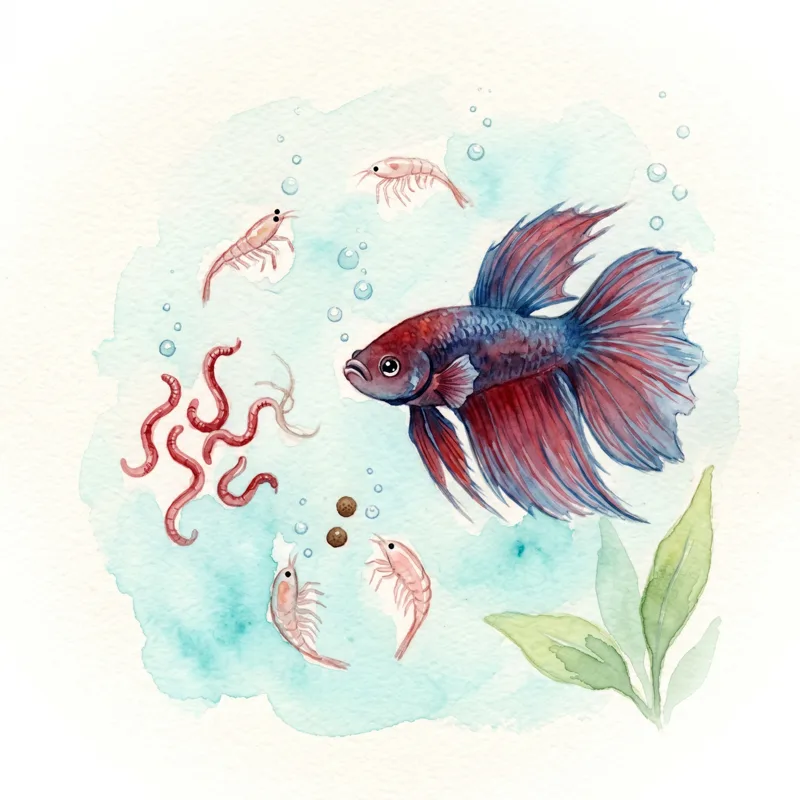
Bettas (Betta splendens) are obligate carnivores native to the rice paddies and slow-moving streams of Southeast Asia. In the wild they eat insects, larvae, small crustaceans, and zooplankton — almost no plant matter. This carnivorous diet is the single most important thing to understand about feeding bettas, because most generic fish food on store shelves is wrong for them.
This complete guide covers exactly what bettas can eat — pellets, live foods, frozen options, treats, foods to avoid, and the feeding schedule that keeps a betta vibrant for 3–5 years.
Betta Diet at a Glance
| Food Category | Examples | Frequency |
|---|---|---|
| Staple | High-protein betta-specific pellets | Daily, 3–4 pellets twice a day |
| Live/Frozen Protein | Bloodworms, brine shrimp, daphnia, mysis shrimp | 2–3× per week (replaces a pellet meal) |
| Freeze-Dried | Bloodworms, brine shrimp (rehydrate first) | Occasional |
| Treats / Constipation Cure | Quarter of a shelled blanched pea | 1× per week MAX |
| Avoid | Plant-based fish food, bread, dairy, salted foods | Never |
| Fasting day | No food at all | 1× per week |
What Bettas Eat (5-Step Daily Diet)
The snippet-ready betta feeding routine:
- Morning meal — 2–3 high-quality betta pellets, pre-soaked for 10 seconds to prevent bloating.
- Evening meal — 2–3 more pellets, OR rotate in frozen bloodworms / brine shrimp 2–3 times per week.
- Watch the belly — A healthy betta belly is slightly rounded, never bloated or pinecone-shaped.
- Fast one day a week — Skip food entirely on one fixed day to clear the digestive tract.
- Treat constipation with peas — If you see stringy white feces or bloating, feed a tiny piece of shelled blanched pea (no more than once a week, ever).
That’s it. Bettas thrive on small, frequent, high-protein meals — never on large or plant-based feedings.
Bettas Are Obligate Carnivores
Many fish keepers feed their betta tropical flakes or generic fish food and wonder why their fish gets bloated, constipated, or fades in color. The reason is dietary:
Bettas evolved to eat:
- Mosquito larvae
- Daphnia (water fleas)
- Small worms (bloodworms, blackworms)
- Brine shrimp and other tiny crustaceans
- Insects that fall on the water surface
They did NOT evolve to eat:
- Algae or aquatic plants
- Vegetable matter
- Plant proteins (soy, wheat) — common fillers in cheap fish food
Key biological factors that shape the betta diet:
- Tiny stomach — Roughly the size of their eye. Overfeeding is the #1 cause of betta health problems.
- Upturned mouth — Designed to grab food from the surface, then sink with it.
- Short digestive tract — Optimized for protein, not fiber. Plant matter ferments and causes bloating.
- Labyrinth organ — Bettas breathe atmospheric air. Surface gulping is normal and not a sign of distress (unlike with goldfish).
Staple Foods: Betta Pellets
A high-quality betta-specific pellet should be the foundation of every betta diet. NOT tropical flakes. NOT goldfish food. NOT generic “fish food.”
What to Look for in a Betta Pellet
- First ingredient is whole fish, krill, or shrimp — not “fish meal” or “wheat flour”
- 40%+ protein content — minimum
- Low fillers — avoid pellets where wheat, corn, or soy lead the ingredient list
- Small enough to eat in one bite — bettas have small mouths
- Slow-sinking or floating — bettas surface-feed naturally
Trusted Betta Pellet Brands
- Fluval Bug Bites Betta — Black soldier fly larvae as #1 ingredient. Excellent.
- Hikari Betta Bio-Gold — Long-time favorite, well-balanced.
- Omega One Betta Buffet — High protein, whole salmon as #1 ingredient.
- New Life Spectrum Betta Formula — Premium, color-enhancing.
- Northfin Betta Bits — Krill-based, great for picky eaters.
Brands to AVOID
- “Betta food” pellets sold cheaply at big-box stores with wheat or corn as primary ingredients
- Tropical flake food
- Generic “tropical fish pellets”
- Goldfish food (way too much plant matter)
How Many Pellets to Feed a Betta
3–4 pellets, twice a day. That’s it. Pellets expand in water — feeding more than this leads to bloating and constipation. If your betta refuses food, skip the meal and try again later. They never starve themselves.
Pre-soak tip: Drop pellets in a small cup of tank water for 10–30 seconds before feeding. This prevents them from expanding inside the betta’s stomach.
Live and Frozen Protein for Bettas
Variety is essential. A betta fed only pellets becomes nutritionally bored and may lose color or appetite. Replace one pellet meal with frozen or live protein 2–3 times per week.
Best Protein Foods for Bettas
| Food | Notes | Frequency |
|---|---|---|
| Frozen bloodworms | Bettas’ favorite. Thaw before feeding. | 2× per week max |
| Frozen brine shrimp | Excellent enrichment, color-enhancing | 2–3× per week |
| Frozen daphnia | Natural laxative, great for digestion | 1–2× per week |
| Mysis shrimp | High protein, less bloat than bloodworms | 2× per week |
| Black soldier fly larvae | Calcium-rich, balanced | 1–2× per week |
| Tubifex worms (live) | High disease risk; only from clean source | Rare |
Why Bloodworms Should Not Be Daily
Bloodworms are bettas’ favorite food, but they are also a common cause of betta constipation. They are high in protein but lack fiber, and feeding them daily creates a backed-up digestive tract. Limit to 2 bloodworms, 2 times per week maximum.
Freeze-Dried Foods
Freeze-dried bloodworms, brine shrimp, and daphnia are a convenient pantry staple. Always rehydrate them before feeding — drop in tank water for 30 seconds first. Feeding dry freeze-dried food is a major cause of betta bloating because it expands inside the gut.
Treats: The One-Pea Rule
Bettas don’t need treats. The one exception:
Shelled Blanched Peas (For Constipation Only)
If your betta is constipated (stringy white feces, bloating, lethargy after meals), give a tiny piece of shelled blanched pea:
- Boil one frozen pea for 30 seconds
- Cool in cold water and shell
- Cut to about a quarter of one pea — the size of a small pellet
- Feed once and observe
Maximum frequency: Once a week, and only when constipation symptoms appear. Bettas are carnivores and don’t get nutritional benefit from peas — they’re medicine, not food.
Foods to NEVER Feed Bettas
These foods cause real harm:
- Tropical fish flakes — Wrong protein ratio, too much plant filler
- Goldfish food — Designed for omnivores, lacks the protein bettas need
- Bread, crackers, chips — Expand in gut, cause bloating, see Can Fish Eat Bread?
- Vegetables (other than the medicinal pea) — Bettas can’t digest plant matter
- Salted or seasoned anything — Causes osmotic stress
- Dairy products — Bettas can’t process lactose
- Raw chicken or beef — Wrong nutrition profile, bacterial risk
- Citrus or fruits — Acidic, no nutritional value for bettas
- Mammal meat or fat — Bettas evolved on insect/crustacean protein only
- Live feeder fish (guppies, etc.) — High disease risk, unnecessary
The “human food” myth: Bettas absolutely cannot eat “a tiny bit” of any human food. Their carnivorous digestion is highly specialized. Stick to the foods listed above.
Betta Feeding Schedule
A simple weekly routine that keeps bettas vibrant:
| Day | Morning | Evening |
|---|---|---|
| Monday | 3 pellets | 3 pellets |
| Tuesday | 3 pellets | Frozen bloodworms (2–3) |
| Wednesday | 3 pellets | 3 pellets |
| Thursday | 3 pellets | Frozen brine shrimp |
| Friday | 3 pellets | 3 pellets |
| Saturday | 3 pellets | Frozen daphnia |
| Sunday | Fasting day | — |
Portion guidance: A betta’s stomach is the size of its eye. Always feed less than you think — a betta can survive a week without food but cannot survive a single bloated digestive tract that ruptures.
Diet by Betta Life Stage
Fry (0–4 weeks)
- Days 1–7: Infusoria (paramecium culture) or commercial fry food
- Weeks 2–4: Microworms, baby brine shrimp, vinegar eels
- Feed 3–5 times per day, tiny amounts each time
Juvenile (1–3 months)
- Crushed pellet powder
- Baby brine shrimp continues
- Daphnia introduces here
- Feed 2–3 times per day
Adult (3+ months)
- Standard adult schedule (above)
- 2 meals per day with 1 fasting day per week
Senior (3+ years)
- Slightly reduced portions
- More easily-digestible foods (daphnia, soaked pellets)
- Watch for reduced appetite — a sign of decline
Common Betta Feeding Mistakes
Mistake 1: Overfeeding. Far and away the #1 betta killer. Every day’s portion should be tiny.
Mistake 2: Feeding flake food. Generic tropical flake is wrong for bettas in every way.
Mistake 3: Skipping the fasting day. A weekly fast prevents constipation and extends lifespan.
Mistake 4: Daily bloodworms. Tasty but constipating. Limit to 2× per week.
Mistake 5: Feeding dry freeze-dried food. Always rehydrate first.
Mistake 6: “Begging” misinterpretation. Bettas swim to the front of the tank when you approach because they associate humans with food, not because they’re hungry.
Mistake 7: Plant-heavy diets. Bettas are carnivores. Plant matter ferments in their gut and causes bloating.
Mistake 8: Treating water-surface gulping as a problem. Unlike goldfish, bettas naturally breathe surface air via their labyrinth organ. This is normal.
Frequently Asked Questions
Can bettas eat goldfish food?
No. Goldfish food is plant-heavy and lacks the protein bettas need. Long-term feeding of goldfish food causes nutritional deficiency and color loss.
Can bettas eat tropical fish flakes?
Not as a staple. Tropical flakes are formulated for omnivorous community fish. Bettas need a betta-specific food.
Why won’t my betta eat?
Common causes: water temperature too cold (bettas thrive at 78–82°F), food is unfamiliar, water quality issues, or the betta is sick. Try warming the tank, doing a partial water change, and offering live brine shrimp.
How do I know if my betta is overfed?
Signs include a pinecone-shaped or distended belly, lethargy after meals, refusing food at the next meal, and stringy white feces. Skip the next meal and reduce portions.
Can bettas eat vegetables ever?
Effectively no. The only exception is a quarter of a shelled blanched pea once a week, and only when treating constipation. Bettas are obligate carnivores.
What about live mosquito larvae?
Excellent food, identical to wild diet. Only use if you can collect from a clean source (no pesticides, no wild fish water that could carry disease). Many betta keepers culture their own.
Can bettas eat each other? (Yes, this is a real question)
Male bettas will attack and kill each other on sight. They are not cannibals in the traditional sense, but two males in one tank means a fight to the death. This isn’t a feeding question — it’s a housing one.
Should I feed my betta in the morning or evening?
Both. Bettas digest small amounts well, so two small meals (morning and evening) prevents bloating better than one large meal.
More Betta & Fish Food Guides
- Can My Fish Eat Peas? — The constipation cure (also for bettas)
- Can My Fish Eat Cucumber? — Goldfish & pleco favorite (skip for bettas)
- Can My Fish Eat Lettuce? — Romaine yes for omnivores, skip for bettas
- Can My Fish Eat Bread? — Why bread is harmful
- Can My Fish Eat Crackers? — Why processed foods destroy water quality
References & Authoritative Sources
The information in this guide is informed by leading veterinary organizations and toxicology resources. For your pet's specific situation, always consult a licensed veterinarian.