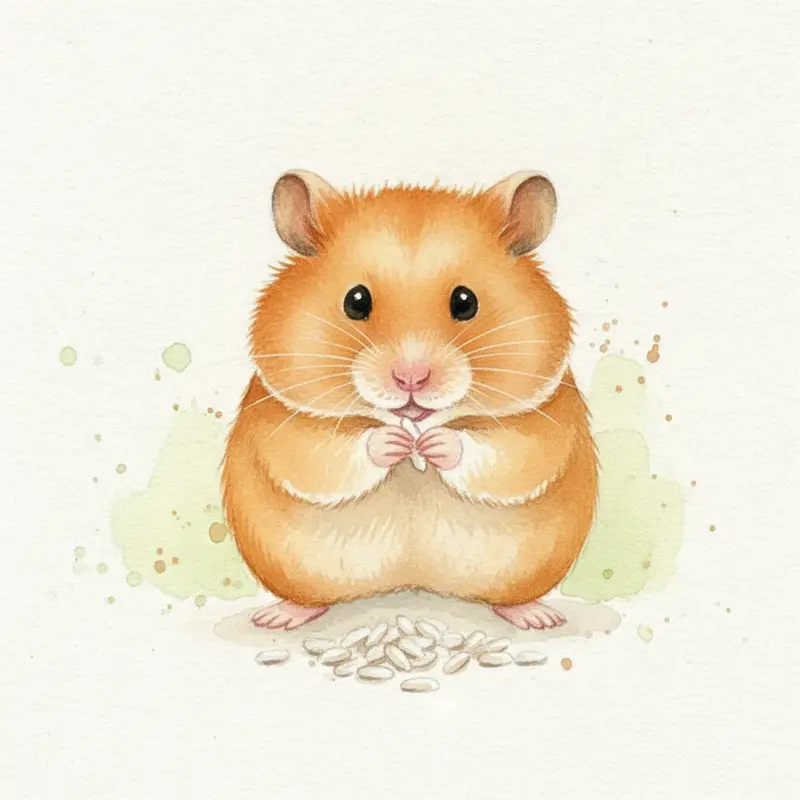
Yes, your hamster can eat rice!
Plain rice is safe for hamsters in tiny amounts, cooked or uncooked — grains are a natural part of their diet and rice already appears in many commercial mixes. Two things shape the portion: rice is **almost pure starch**, so it is a count-the-carbs treat (especially for diabetes-prone dwarfs), and **cooked rice is sticky**, so a warm clump can gum up a cheek pouch. Offer just a few cool, loose grains once or twice a week for a Syrian, less for dwarfs — always plain, with no salt, butter, oil, or seasoning.
Can Hamsters Eat Rice?
Yes — plain rice is safe for hamsters, and in small amounts it is a perfectly reasonable treat. Grains are a natural part of what hamsters eat in the wild, and if you check the ingredients on most commercial hamster seed mixes you will often find rice or other cereals already in the blend. So rice is not some exotic or risky human food for a hamster — it is close to something they are built to eat.
Two things, though, keep rice firmly in the “tiny occasional treat” column rather than the everyday one, and both are covered in detail below. First, rice is almost pure starch — more so than any vegetable you would hand a hamster — which matters enormously for diabetes-prone dwarfs. Second, and this is the point nearly every food list skips: cooked rice is sticky, and a hamster that pouches a warm clump of it can end up with a gummy mess in its cheek.
Why Rice Is Only a “Tiny Filler” Treat
Rice brings some useful energy and a little protein, but nutritionally it is thin compared with a vegetable like broccoli or a protein treat like a mealworm. It is best thought of as a carbohydrate filler — pleasant, safe, and familiar to a hamster’s gut, but not something that earns a big portion.
What rice offers a hamster:
- Easily digested energy — Cooked rice is gentle on the gut, which is why plain rice is sometimes suggested as part of a bland diet for an animal recovering from mild digestive upset (always on a vet’s advice).
- A little plant protein — Around 2.7g per 100g, modest but real.
- B vitamins and minerals (brown rice especially) — Brown rice keeps its bran and germ, so it carries more thiamine, niacin, magnesium, and fiber than white rice.
- A familiar grain — Rice is close to the cereals already in commercial hamster food, so it rarely causes a fussy gut when introduced slowly.
Key Nutritional Facts: White rice (per 100g, cooked plain)
- Calories: 130 kcal
- Protein: 2.7g
- Carbohydrate: 28g (almost all starch)
- Sugar: 0.1g
- Fiber: 0.4g
- Fat: 0.3g
- Water: 68%
- Magnesium: 12mg
- Vitamin B3 (Niacin): 0.4mg
The Catch: Rice Is Almost Pure Starch
Here is the single most important nutritional point, and the reason rice is a few-grains treat rather than a spoonful. With a watery vegetable like cucumber, the limiting factor is water. With peas, it is a mix of sugar and starch. With rice, it is starch, and almost nothing else — around 28g of carbohydrate per 100g of cooked rice, with barely any fiber, fat, or protein to slow it down.
The body converts that starch to sugar as it digests, which is exactly what makes rice a concern for diabetes-prone dwarf hamsters (see the breed section below). A Syrian, being far larger, handles a few grains comfortably, but even for a Syrian rice earns its place only occasionally and in the smallest of portions. Think of rice as the lightest of fillers — safe, but adding little beyond calories — so you give a hamster a few grains the way you might offer a single sunflower seed, not a scoop.
The Cheek-Pouch Trap: Why Cooked Rice Needs Care
This is the safety point that is unique to hamsters, and it is almost never mentioned in general “can hamsters eat rice” articles. Hamsters are natural hoarders: offered food, they will often stuff it into their cheek pouches to carry back to a stash rather than eat it on the spot. Cooked rice creates two specific, hamster-only problems here:
- Stickiness. Warm, freshly cooked rice is gluey — the grains clump together and cling to surfaces. A sticky clump pushed into a dry cheek pouch can smear and stick rather than slide back out cleanly, which is uncomfortable and, in the worst case, can contribute to pouch impaction.
- Spoilage in the stash. Cooked rice is moist and spoils fast. A clump hidden in a food stash can grow mould or, like all cooked rice left at room temperature, harbour bacteria within hours — and a hamster that later eats its stashed rice can get sick.
How to manage it: serve only a few cool, loose grains of cooked rice — never a warm, sticky ball — so there is nothing to clump. Offer it during hands-on time where you can watch it eaten rather than pouched, and check your hamster’s stash every couple of days to clear out any perishable scraps. If pouching is a worry, uncooked rice sidesteps the problem entirely — dry grains don’t stick (more on cooked vs uncooked below).
How to Prepare Rice for Your Hamster
Rice needs almost no preparation, but the few rules matter:
Step 1: Keep it completely plain. Cook rice (or offer it dry) with nothing added — no salt, butter, oil, stock, soy sauce, or seasoning of any kind. This rules out leftover dinner rice, which almost always contains salt.
Step 2: Cool cooked rice fully. Serve cooked rice at room temperature, never warm. Warm rice is stickier and more likely to clump in a pouch.
Step 3: Separate the grains. Fluff cooked rice so the grains are loose rather than stuck in a lump, and offer only a few.
Step 4: Measure a tiny portion. A few grains for a Syrian — think of a small pinch, not a spoonful. Dwarfs get a grain or two, or nothing (see the table).
Step 5: Offer by hand or in a clean dish. Watch your hamster eat it rather than pouch a clump.
Step 6: Remove leftovers within a few hours. Cooked rice spoils quickly in a warm cage. Take out anything uneaten, and check the stash for hidden grains.
Portion Sizes by Hamster Species
Because rice is starch-dense, the portion scales down sharply for the smaller, diabetes-prone breeds — and for the most at-risk dwarfs, skipping rice entirely is a perfectly good choice:
| Species | Average Weight | Rice Portion | Maximum Frequency |
|---|---|---|---|
| Syrian (Golden) | 120-170g | A few grains (a small pinch) | 1-2 times per week |
| Campbell’s Dwarf | 30-45g | 1-2 grains, or skip | 1 time per week at most |
| Winter White Dwarf | 25-40g | 1-2 grains, or skip | 1 time per week at most |
| Roborovski Dwarf | 20-25g | 1 grain, or skip | Rarely, if at all |
| Chinese | 30-45g | 1-2 grains | 1 time per week |
Why dwarfs get less: with cucumber we worry about water; with rice we worry about starch turning to sugar. Russian dwarfs are genetically prone to diabetes, so a near-pure-starch food is one to keep to a grain or two — or leave out altogether in favour of a low-sugar vegetable.
Can Specific Hamster Breeds Eat Rice?
All hamsters can eat plain rice, but how much — and whether it is worth offering at all — depends on the breed’s size and diabetes risk.
Can Syrian Hamsters Eat Rice?
Yes — Syrians handle rice most comfortably. As the largest pet hamster (120-170g), a Syrian can have a few grains of plain rice, once or twice a week, cooked soft or a few grains uncooked. The starch load of a small pinch is modest for their size, but rice still adds little beyond energy, so it should rotate with more nutritious treats rather than become a habit. Remove any clump your hamster pouches instead of eating.
Can Russian Dwarf Hamsters Eat Rice?
Only barely. “Russian dwarf” means Campbell’s and Winter White hamsters, which are prone to diabetes — and rice is almost pure starch, which the body turns into sugar. At most, offer one or two grains once a week, and honestly, many owners are better off skipping rice for these breeds and sticking to low-sugar vegetables. If your dwarf is diabetic or overweight, do not offer rice at all.
Can Roborovski Hamsters Eat Rice?
Barely, if at all. Roborovskis are the smallest hamster (20-25g), so even a grain or two of pure starch is a meaningful dose for them, and dry grains can be hard for such a tiny mouth. If you offer rice at all, make it a single grain of soft cooked rice, rarely — and there is no harm in leaving rice off a Robo’s menu entirely.
Can Chinese Hamsters Eat Rice?
Yes, in a tiny amount. Chinese hamsters (30-45g) can have one or two grains, about once a week. They are not classed with the Russian dwarfs for diabetes risk, but their small size still means rice is a rare nibble rather than a regular treat.
Cooked vs Uncooked Rice for Hamsters
Owners often worry that dry rice is dangerous — the same “uncooked rice swells up and harms animals” idea that gave rise to the wedding-rice myth about birds. For hamsters, as for birds, that myth is false. Hamsters naturally gnaw hard, dry seeds and grains, and a few grains of uncooked rice pass through without trouble. Here is how the two forms compare:
- Uncooked (dry) rice — Safe for Syrian and Chinese hamsters. Its big advantage is that it does not stick, so it cannot clump in a cheek pouch, and gnawing it gives the ever-growing incisors a little work. Its downside is hardness: very small dwarfs and Robos may struggle with it.
- Cooked rice — Safe, soft, and easy for tiny hamsters to eat, which makes it the gentler option for dwarfs. The trade-offs are the ones above: it is sticky (serve only a few cool, loose grains) and it spoils fast (remove leftovers within a few hours).
Either way, plain is the rule. If you are unsure which to offer, a few grains of plain uncooked rice is the lowest-fuss, lowest-risk choice for a Syrian; soft-cooked plain rice is kinder for a dwarf.
Brown vs White Rice
If you are going to offer rice, brown rice is the more nutritious pick:
| Nutrient | Brown Rice | White Rice | Better for Hamsters |
|---|---|---|---|
| Fiber | Higher (~1.6g/100g) | Lower (~0.4g/100g) | Brown |
| B vitamins & minerals | Higher | Lower | Brown |
| Protein | Similar | Similar | Tie |
| Ease for tiny mouths | Chewier | Softer | White |
Bottom line: brown rice keeps its bran and germ, so it brings a little more fiber and B vitamins; white rice is closer to pure starch. Both are safe plain, and both are still only a few-grains treat.
What Rice to Avoid
The rice itself is rarely the problem — what is added to it almost always is:
- Fried rice / egg-fried rice — never. Oil, salt, soy sauce, onion, and garlic. Onion and garlic are toxic to hamsters.
- Takeaway or leftover dinner rice — no. Nearly always salted or seasoned.
- Sushi rice — no. Made with sugar and rice vinegar.
- Rice pudding — no. Sugar and dairy; hamsters don’t digest dairy well.
- Seasoned or flavoured rice packets — no. Salt, spices, and additives.
- Rice cakes and rice crackers — best skipped. Often salted, and a very dense hit of starch.
Stick to plain cooked or plain uncooked rice with nothing on it at all.
What to Do If Your Hamster Ate Too Much Rice
Plain rice is not toxic, so a one-off overindulgence is rarely an emergency — but a hamster that gets into more rice than it should may have mild digestive upset or, if it pouched a sticky clump, a gummy cheek. Here is how to handle it:
- Remove the extra rice and any other fresh food from the cage, and check the stash for hidden clumps.
- Check the cheek pouches gently if your hamster pouched cooked rice — look for a stuck clump or any sign of discomfort. Never try to dig out pouch contents yourself; if a pouch looks stuffed or swollen and won’t empty, call a vet.
- Offer only the normal dry food and plenty of water for a day or two to let the gut settle.
- Watch the droppings. Soft or loose droppings should firm up within a day on a plain diet.
- Watch a diabetic or dwarf hamster more closely — a big starch hit is more of a concern for them.
Contact an exotic-pet veterinarian if you see watery diarrhea lasting more than a day, a wet or dirty tail area, lethargy, loss of appetite, or a cheek pouch that stays swollen or won’t empty.
Building a Balanced Hamster Diet
Rice is a minor filler treat, not a staple — here is how it fits in:
| Food Category | Percentage of Diet | Examples |
|---|---|---|
| Quality pellet or seed mix | 80-85% | Lab blocks, Higgins Sunburst, Mazuri |
| Fresh vegetables | 10-15% | Cucumber, carrot, broccoli, peas |
| Fresh fruits & grains (treats) | 5% or less | Strawberry, apple, a few grains of rice |
| Protein treats | Occasional | Mealworm, boiled egg, plain tofu |
The foundation of your hamster’s diet should always be a high-quality commercial food, with unlimited timothy hay for fiber and dental wear. A few grains of rice are a small bonus on top — pleasant and safe, but adding little, so there is no need to offer it often.
Kaytee Fiesta Hamster Food
A complete daily diet formulated specifically for hamsters, combining grains, seeds, and dehydrated fruits and vegetables for balanced nutrition. With a solid commercial foundation like this in the bowl, a few grains of plain rice become a harmless little extra rather than something your hamster needs.
$12.99 View on AmazonAs an Amazon Associate, we earn from qualifying purchases.
Introducing Rice for the First Time
If your hamster has never had rice before, go slowly:
Day 1: Offer a single grain of plain rice. Watch your hamster eat it and observe for the next 12-24 hours.
Day 2-3: Check the droppings. They should stay firm, dry, and pellet-shaped. Any softening means even that small amount was too much.
Day 4-5: If all is well, offer a few grains (Syrian) or keep to a single grain (dwarf).
Week 2 onward: Settle into the species portion in the table, keeping to the frequency limits — and remember rice is a tiny, occasional filler, not a daily treat.
Warning Signs to Watch For
Stop offering rice and reassess if you notice:
- Soft or watery droppings — Remove fresh foods until stools firm up.
- A wet or dirty tail area — Can indicate diarrhea, a serious emergency in hamsters.
- A swollen cheek pouch that won’t empty — Possible pouch impaction from sticky rice; see a vet if it persists.
- Lethargy or reduced appetite — Warrants a break from treats and, if it continues, a vet visit.
- Rapid weight gain or excessive thirst — In dwarfs especially, a reason to cut starchy and sugary treats and speak to a vet about diabetes.
Most hamsters eat a few grains of rice with no trouble at all — these signs simply mean the portion was too large or too frequent.
Frequently Asked Questions
Can baby hamsters eat rice?
Baby hamsters (pups) should not be offered rice until they are fully weaned and eating solid food on their own, usually around 3-4 weeks of age. Even then, a single grain of soft cooked rice is plenty. Young hamsters have very sensitive digestive systems, and a starchy food is better introduced once they are older and settled on their normal diet.
Can hamsters eat rice every day?
No. Rice is nearly pure starch and adds little nutrition, so it is an occasional filler rather than a daily food. A few grains once or twice a week for a Syrian, and a grain or two (or none) for dwarfs, is plenty. Everyday treats are better drawn from low-sugar vegetables like cucumber and broccoli.
Can hamsters eat rice krispies or puffed rice cereal?
It is best avoided. Breakfast cereals like Rice Krispies are usually sweetened and sometimes salted, and puffed rice is a very airy, dense hit of refined starch with no real nutrition. A grain of plain cooked or uncooked rice is a far better choice than any processed rice cereal.
Is rice good for a hamster with diarrhea?
Plain cooked rice is sometimes part of a bland diet for a recovering gut, but diarrhea in a hamster is serious and can be fatal through rapid dehydration. Do not try to treat it at home with rice — a wet tail or watery droppings is a reason to contact an exotic-pet veterinarian promptly, and any diet change should follow their advice.
More Foods Your Hamster Can and Cannot Eat
Curious about other foods for your hamster? Check out our other hamster food safety guides:
- Can My Hamster Eat Peas? — A protein-rich “count the carbs” treat
- Can My Hamster Eat Cucumber? — A low-sugar, hydrating treat
- Can My Hamster Eat Carrots? — A crunchy, vitamin-A-rich vegetable
- Can My Hamster Eat Lettuce? — Romaine yes, iceberg no
- Can My Hamster Eat Strawberries? — A juicy safe snack in moderation
- Can My Hamster Eat Apples? — Safe flesh, but the seeds are toxic
- Can My Hamster Eat Bananas? — A potassium-rich mini treat
- Can My Hamster Eat Grapes? — Safe, but high in sugar
- Can My Hamster Eat Cheese? — A tiny treat with big rules
References & Authoritative Sources
The information in this guide is informed by leading veterinary organizations and toxicology resources. For your pet's specific situation, always consult a licensed veterinarian.