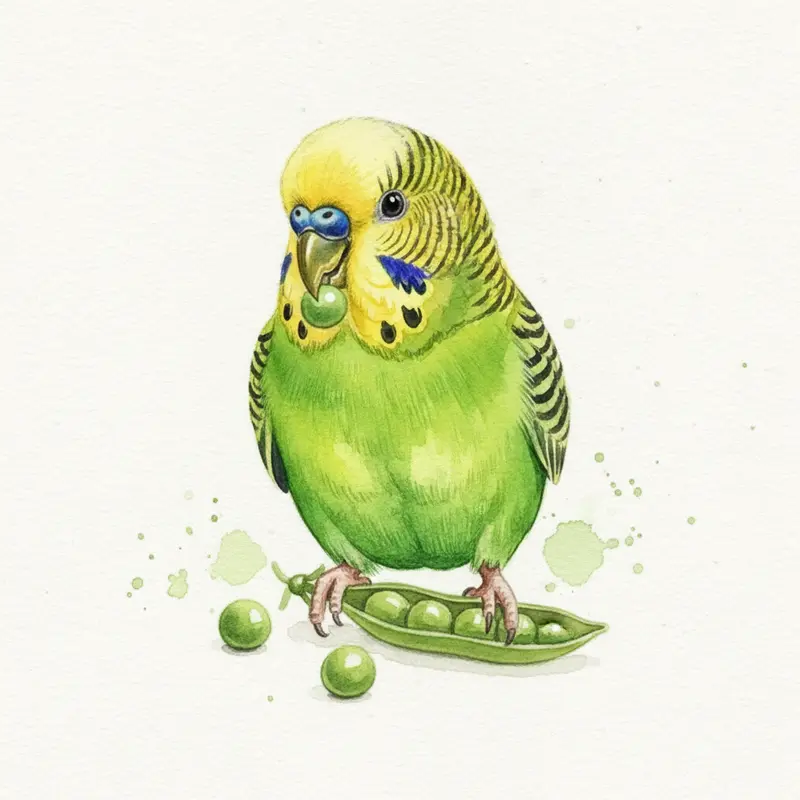
Yes, your bird can eat peas!
Peas are a safe, nutritious treat for most pet birds — and one of the few vegetables that brings real protein to the bowl. They are non-toxic and rich in fiber, vitamin A, vitamin K, and the eye-supporting antioxidants lutein and zeaxanthin. Fresh or thawed-frozen peas are ideal; skip canned peas and "mushy peas," which are loaded with salt. Serve plain, a few times a week, and let bigger birds shell them from the pod for foraging fun.
Why Peas Are a Great Treat for Birds
Most “can my bird eat this?” articles are a list of warnings. Peas are a happy exception: they are not only safe, they are one of the more genuinely useful vegetables you can put in a bird’s dish. Two things make them stand out from the usual fruit-and-veg treats.
First, peas are unusually high in protein for a vegetable — around 5g per 100g, several times what you get from cucumber, lettuce, or most fruit. That protein comes with a full spread of vitamins and, unlike sunflower seeds, without a heavy load of fat. Second, peas come with their own built-in foraging toy: the pod. A bird working the peas out of a snap or snow pea is doing exactly the kind of manipulation it would do in the wild, which is worth as much for its mind as the peas are for its body.
The benefits of peas for birds include:
- Protein — Peas are one of the best plant protein sources you can offer as a fresh food, useful for feather condition and general body maintenance.
- Vitamin A (as beta-carotene) — Supports skin, feathers, eyes, and the airway and gut linings. Vitamin A deficiency is the single most common nutritional problem in pet birds, so any A-rich vegetable is a plus.
- Lutein and zeaxanthin — Peas are rich in these carotenoid antioxidants, which support eye health and vivid feather color.
- Fiber — Aids digestion and gives foraging birds something satisfying to work through.
- Vitamin K and vitamin C — Support blood clotting, bone health, and immunity.
- Enrichment — A whole pod clipped to the bars turns snack time into a foraging puzzle.
Key Nutritional Facts: Green peas (per 100g, raw)
- Calories: 81 kcal
- Protein: 5.4g (high for a vegetable)
- Sugar: 5.7g (moderate)
- Fiber: 5.7g
- Vitamin A: 765 IU
- Vitamin C: 40mg
- Vitamin K: 24.8mcg
- Lutein + zeaxanthin: 2,477mcg
- Potassium: 244mg
- Water: 79%
- Fat: 0.4g (very low)
The Protein Bonus: What Makes Peas Different
Most of the vegetables we hand our birds — cucumber, lettuce, carrot — are mostly water and fiber with very little protein. Peas break that pattern. At roughly 5 grams of protein per 100 grams, a serving of peas quietly adds a bit of body-building nutrition that leafy greens and watery vegetables cannot.
That matters because a bird’s protein normally comes from seeds and pellets, and seed-heavy diets tend to be high in fat while fresh treats are usually protein-light. Peas sit in a useful middle ground: a fresh, low-fat food that still carries meaningful protein, plus the vitamin A that seed diets are famously short of. It is not a reason to overfeed them — variety still rules — but it is a reason peas earn a regular spot in the rotation rather than being an occasional novelty.
One small note of balance: because peas are more calorie- and starch-dense than something like cucumber, they are a “vegetable you count,” not an unlimited filler. Keep them to a modest portion a few times a week and they are all upside.
Portion Sizes by Bird Species
Peas are a vegetable rather than a sugary fruit, so they can appear regularly — but they still sit alongside a balanced foundation. Aim for vegetables at roughly 15-20% of the diet, fruit at 10-15%, and pellets as the 60-70% base.
Small birds (budgies, parakeets, finches, canaries, lovebirds):
- 2-4 peas, mashed or lightly squished so the soft inside is easy to reach
- 2-3 times per week
- Many also enjoy nibbling fresh pea pods and shredding pea shoots
Medium birds (cockatiels, conures, quaker parrots, caiques):
- About a teaspoon of whole peas, or a short length of pea pod
- 2-3 times per week
- A whole snap pea clipped to the bars doubles as foraging enrichment
Large birds (African greys, amazons, macaws, cockatoos, eclectus):
- A small spoonful of peas, or a whole pod to shell
- 2-3 times per week
- Big parrots love the job of splitting a pod and popping out the peas one by one
Can Specific Birds Eat Peas?
The portions above give the numbers, but the most common question is whether peas are safe for a particular kind of bird. The answer is yes across the board — the difference is portion size and how you prepare them.
Can Parrots Eat Peas?
Yes. Large parrots (African greys, amazons, macaws, cockatoos) can enjoy a small spoonful of peas or a whole pod two to three times a week, fresh or thawed-frozen. Parrots are the species that gets the most out of peas, because they love to shell them: hand an African grey or amazon a snap pea and it will happily work the pod open and eat the peas one at a time — a natural, absorbing bit of foraging. Peas also add protein and vitamin A, both useful for parrots kept on seed-rich diets.
Can Budgies Eat Peas?
Yes, and budgies tend to love them. Because budgies (parakeets) are tiny (30-40g), offer 2-4 peas, mashed or squished, two to three times a week so the soft inside is easy for a small beak. Many budgies also enjoy picking at a fresh pea pod hung in the cage, or nibbling pea shoots (the young leafy sprouts), which are a gentle, safe green they can graze on.
Can Cockatiels Eat Peas?
Yes. Cockatiels can have about a teaspoon of peas, or a short piece of pod, two to three times a week. Cockatiels can be wary of new textures, so try squishing a couple of peas into a familiar vegetable mix, or clip a pod to the bars and let your bird investigate at its own pace. Give it a week or two of repeated, low-pressure exposure before deciding your cockatiel dislikes peas — many warm up once the food feels familiar.
Can Conures and Lovebirds Eat Peas?
Yes. These lively parrots usually take to peas readily. Conures can have a teaspoon or so of peas, or a short length of pod, and lovebirds 2-4 peas or a small piece of pod, two to three times a week. Their playful, busy nature makes a whole pod a perfect foraging treat — clip it to the cage bars and let them shred and shell it.
Fresh, Frozen, Canned, or Dried? What to Serve
This is where most of the real do’s and don’ts live — the pea itself is safe, but the form you buy makes all the difference.
- Fresh peas — Excellent. Shell them from the pod (or offer the whole edible pod) and serve raw. No cooking needed.
- Frozen peas — One of the best and most convenient choices. Frozen peas are picked and frozen at peak freshness, so they hold their nutrients well. Thaw them in warm water and serve at room temperature — never straight from the freezer (too cold) and never hot.
- Canned peas — avoid. Canned peas sit in salty water, and excess sodium is genuinely dangerous for small birds. The convenience is not worth it when thawing a frozen pea takes a minute.
- “Mushy peas” and seasoned peas — avoid. These are cooked with salt, and often butter or mint. Plain only.
- Dried or split peas — cook first, never raw. Dried peas and split peas are hard and starchy; only offer them cooked plain and soft, or better, sprouted (see below). Do not give a bird hard dry split peas as-is.
Whichever form you choose, serve peas plain — no salt, butter, oil, or seasoning — and remove uneaten fresh peas within a few hours, since they spoil and can grow bacteria, sooner in warm weather.
Pea Pods, Pea Shoots, and Sprouted Peas
Some of the best parts of the pea plant are not the peas themselves:
Pea pods (snow peas and sugar snap peas) — The soft, edible pods of these types are safe and make superb foraging enrichment. A bird gets to work the peas out of the pod exactly as it would in the wild. Wash the pod well; for small birds, slit it open or cut it into rings so they can reach inside. (The tough, stringy pods of mature shelling peas are less pleasant — stick to the soft edible-pod types.)
Pea shoots and microgreens — The young leafy tips and sprouted seedlings are a tender, nutrient-dense green that many birds graze happily. They are a lovely way to add fresh greens for budgies and other small birds.
Sprouted peas — Sprouting dried peas (soak, rinse, and let them germinate over a day or two) turns a hard, starchy seed into a soft, living food that is easier to digest and rich in nutrients. Sprouts are a favorite in the parrot-nutrition world. Rinse them well and keep them scrupulously clean, since sprouts can grow mold or bacteria if left damp and warm.
How to Serve Peas to Your Bird
Squished or mashed — The easiest form for small birds like budgies and finches; the soft inside is instantly reachable.
Whole, thawed — Scatter a few thawed frozen peas over your bird’s usual chop or veg mix for medium and large birds.
In the pod, on a clip — Hang a washed snap or snow pea from the cage bars and let the bird forage the peas out.
Pea shoots in a dish — Offer a small handful of the young leafy sprouts as a fresh green.
Sprouted — Soak and germinate dried peas for a soft, digestible, nutrient-rich treat; rinse well and serve fresh.
Always wash fresh peas and pods (organic where possible) to remove pesticide residue, and thaw frozen peas in warm water rather than serving them cold.
Pea Products to Avoid
Only plain fresh, thawed-frozen, or properly prepared peas are appropriate. Skip these:
- Canned peas — Packed in salty water; excess sodium is dangerous for small birds.
- Mushy peas — Cooked with salt and sometimes butter; not a bird food.
- Seasoned, buttered, or minted peas — Salt, butter, garlic, and onion range from unnecessary to toxic for birds.
- Raw dried or split peas — Too hard and starchy as-is; cook plain and soft, or sprout them instead.
- Pea-based snacks (crisps, puffs, “pea straws”) — Salted, oily, and processed; not suitable.
Signs Your Bird Has Eaten Too Much Pea
Peas are not toxic, but as with any treat, overdoing it can crowd out the balanced diet or cause mild upset:
- Loose droppings after a large fresh-food serving
- Filling up on peas and ignoring pellets and leafy greens
- A bird that eats only peas and refuses its other vegetables
These are minor and resolve once you return to modest portions. Peas should complement a pelleted or well-balanced diet, not replace it — and because they are more starchy and calorie-dense than watery vegetables like cucumber, they are a food to portion rather than pour. If droppings stay abnormal for more than a day, consult an avian veterinarian.
ZuPreem FruitBlend Bird Food for Medium Birds
A nutritionally complete pelleted diet that should form the foundation of your bird's meals, fortified with the vitamin A that seed diets lack. Fresh vegetables like peas make an excellent natural supplement, but treats sit on top of solid daily nutrition, not in place of it. Designed for cockatiels, conures, lovebirds, and similar medium-sized species.
$18.99 View on AmazonAs an Amazon Associate, we earn from qualifying purchases.
Frequently Asked Questions
Can baby birds eat peas?
Hand-fed baby birds should stay on their formula until they are fully weaned and eating solid food on their own. Once weaned, a couple of soft, well-squished peas can be one of the first vegetables you introduce, watching for any digestive upset. Start small.
Are frozen peas or fresh peas better for birds?
Both are excellent. Frozen peas are picked and frozen at peak ripeness, so nutritionally they are very close to fresh — and far more convenient. Just thaw them in warm water and serve plain and room-temperature. The one form to avoid is canned peas, which are high in salt.
Can birds eat pea pods?
Yes — the soft edible pods of snow peas and sugar snap peas are safe and make great foraging enrichment. Wash them well and, for small birds, slit or slice them so the peas inside are easy to reach. Avoid the tough, stringy pods of mature shelling peas.
My bird only wants peas and ignores everything else — is that a problem?
Peas are moreish, and some birds will hold out for them. Do not let peas crowd out pellets and leafy greens; offer them as part of a mixed serving rather than alone, and keep portions modest. Variety is the goal, with peas as one good option among many.
More Foods Your Bird Can and Cannot Eat
Wondering what else is safe for your bird? Check out our other bird food safety guides:
- Can My Bird Eat Carrots? — A vitamin A powerhouse
- Can My Bird Eat Broccoli? — A calcium-rich veggie, best in moderation
- Can My Bird Eat Celery? — A hydrating, low-sugar treat, leaves first
- Can My Bird Eat Cucumber? — A safe, low-sugar, hydrating treat
- Can My Bird Eat Lettuce? — Romaine yes, iceberg no
- Can My Bird Eat Apples? — Safe flesh, but the seeds are toxic
- Can My Bird Eat Strawberries? — A safe, vitamin-rich fruit they love
- Can My Bird Eat Grapes? — Safe unlike dogs, but watch the pesticides
- Can My Bird Eat Bananas? — A tropical treat they will go crazy for
- Can My Bird Eat Rice? — Cooked and plain, a safe everyday grain
- Can My Bird Eat Avocado? — A deadly fruit for your feathered friend
- Can My Bird Eat Chocolate? — Absolutely not, here is why
References & Authoritative Sources
The information in this guide is informed by leading veterinary organizations and toxicology resources. For your pet's specific situation, always consult a licensed veterinarian.