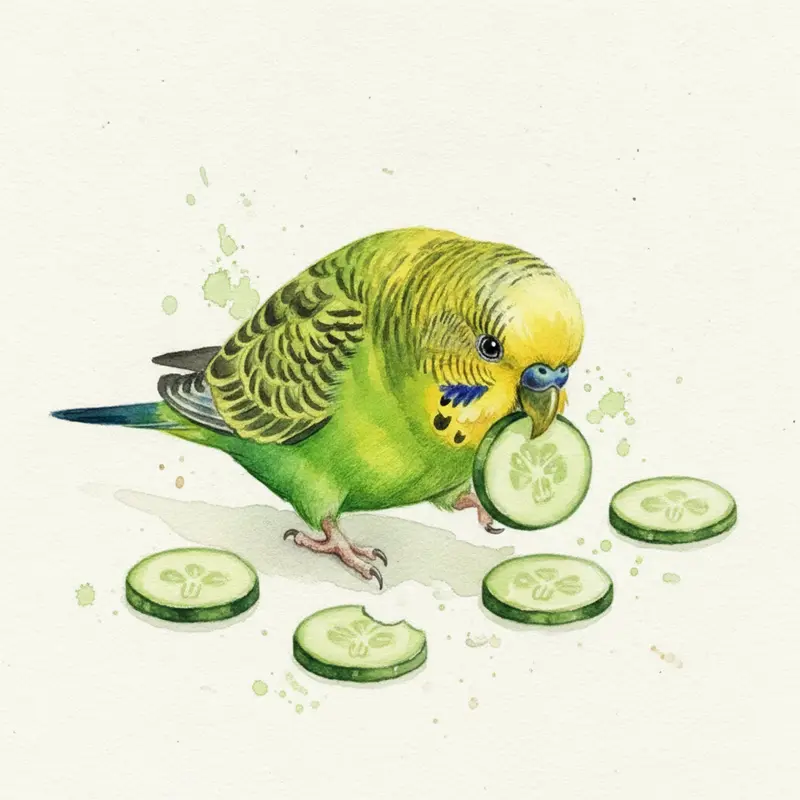
Yes, your bird can eat cucumber!
Cucumber is a safe, hydrating treat for most pet birds. It is non-toxic, extremely low in sugar — which makes it a smarter choice than sweet fruit for weight-prone birds — and its high water content provides gentle hydration on hot days. The skin and seeds are both safe. The one thing to manage is portion size: because cucumber is about 95% water, too much can cause loose droppings, so offer a small piece a few times a week.
Why Cucumber Is a Good Treat for Birds
Cucumber sits in a genuinely comfortable spot for bird treats: it is safe, refreshing, and — unlike most fruit — almost sugar-free. For owners who worry about the sugar in bananas, grapes, or strawberries, cucumber is a reassuring alternative that many birds happily nibble, especially in warm weather when the high water content is a bonus rather than a problem.
Unlike some foods that come with a serious safety catch (avocado is toxic to birds, chocolate is dangerous, apple seeds contain cyanide), cucumber is straightforwardly safe. The only characteristic to respect is its very high water content: a benefit in small amounts, but the main reason to keep portions modest.
The benefits of cucumber for birds include:
- Very low sugar — At roughly 1.7g of sugar per 100g, cucumber has a fraction of the sugar of banana, grape, or strawberry. That makes it one of the few treats you can offer a little more freely to birds prone to weight gain and fatty liver disease, such as budgies and amazons.
- Hydration — At about 95% water, cucumber is one of the most hydrating foods you can offer, useful on hot days or for birds that do not drink much on their own.
- Low calorie — At only 15 calories per 100g, cucumber is among the least calorie-dense treats available, so it will not contribute to weight gain the way sugary fruit can.
- Fiber and nutrients in the skin — The peel holds most of the fiber, vitamin K, and antioxidants, supporting healthy digestion.
- Enrichment — The cool, crisp texture and the fun of pecking out the watery seed core give birds something new to explore, which helps break up dietary monotony.
Key Nutritional Facts: Cucumber (per 100g, raw with peel)
- Calories: 15 kcal
- Sugar: 1.7g (very low)
- Fiber: 0.5g
- Vitamin K: 16.4mcg
- Vitamin C: 2.8mg
- Potassium: 147mg
- Magnesium: 13mg
- Water: 95%
- Fat: 0.1g (very low)
The One Real Concern: Water Content
Everything about feeding cucumber to birds comes back to a single fact: it is about 95% water. In small amounts that water is a gentle way to keep a bird hydrated. In large amounts it can overwhelm a small bird’s digestion and cause loose or watery droppings.
This matters more for birds than for many pets because birds are small and dehydration can set in quickly. A budgie weighs only 30-40g, so a piece of cucumber that looks tiny to us is proportionally large for them. The fix is simple and is the same rule that applies to almost every fresh food:
- Introduce cucumber gradually — a small piece the first time, then watch the droppings
- Keep portions modest and space them across the week rather than daily
- Remove uneaten pieces within a couple of hours, since watery vegetables spoil fast and can grow bacteria
Cucumber is watery, but it is not sugary, not fatty, and not toxic — so managing the water content is really the whole job.
Portion Sizes by Bird Species
Vegetables can make up a larger share of a bird’s diet than fruit (aim for vegetables at 15-20% of the diet, fruit at 10-15%, and pellets as the 60-70% foundation). But cucumber’s water content means you still keep portions sensible.
Small birds (budgies, parakeets, finches, canaries, lovebirds):
- A fingernail-sized piece or a thin half-slice
- 2-3 times per week
- Many enjoy pecking the soft seed core; remove uneaten pieces within a couple of hours
Medium birds (cockatiels, conures, quaker parrots, caiques):
- One or two thin slices, or a small chunk
- 2-3 times per week
- Good clipped to the cage bars or offered on a skewer
Large birds (African greys, amazons, macaws, cockatoos, eclectus):
- A small chunk or a few slices
- 2-3 times per week
- Can crunch the skin and seeds with no issue
Can Specific Birds Eat Cucumber?
The portions above give the numbers, but the most common question is whether cucumber is safe for a particular kind of bird. The short answer is yes across the board — the difference is portion size.
Can Parrots Eat Cucumber?
Yes. Large parrots (African greys, amazons, macaws, cockatoos) can enjoy a small chunk or a few slices two to three times a week, and they handle the skin and seeds easily. Because larger parrots are prone to obesity and fatty liver disease, cucumber is a genuinely useful treat: it satisfies the urge for a fresh, crunchy snack without the sugar load of fruit. Cucumber also works well as foraging enrichment — clip a spear to the cage bars or thread chunks onto a stainless steel skewer.
Can Budgies Eat Cucumber?
Yes, but keep it small. Budgies (parakeets) weigh only 30-40g, so a “small” piece is proportionally large for them. Offer a fingernail-sized piece or a thin half-slice two to three times a week. Because budgies gain weight easily and are prone to fatty liver disease, cucumber is a better everyday treat than sugary options like banana or millet spray. Many budgies love pecking the watery seed core — just watch that the droppings do not turn watery.
Can Cockatiels Eat Cucumber?
Yes. Cockatiels can have one or two thin slices, or a small chunk, two to three times a week. Cockatiels can be cautious about new foods, so try clipping a slice to the cage bars where they can investigate it at their own pace, or offer it alongside a familiar vegetable. Give it a week or two of repeated exposure before deciding your bird dislikes it — many cockatiels come around to cucumber once it feels familiar.
Can Conures and Lovebirds Eat Cucumber?
Yes. These lively parrots usually take to cucumber well. Conures can have a thin slice or two, and lovebirds a fingernail-to-thumbnail-sized piece, two to three times per week. Their playful, chewy nature makes cucumber a good enrichment treat on a skewer or clipped to the bars.
Can Birds Eat Cucumber Skin and Seeds?
Yes to both — and this is where cucumber is especially easy compared with fruits that have risky pits or seeds.
- Skin — The peel is safe and actually holds most of the fiber, vitamin K, and antioxidants, so leaving it on is nutritionally the best option. The one caveat is the wax coating on many store-bought cucumbers: give them a good scrub under running water, or peel them if you are unsure. Organic cucumbers are usually unwaxed.
- Seeds — The soft inner seeds are completely harmless. Unlike apple seeds or cherry pits (which contain cyanide compounds), cucumber seeds contain nothing toxic. They do add extra water, so for very small birds you can scoop out the seed core if droppings tend to get loose.
How to Serve Cucumber to Your Bird
Thin slices or rounds — The simplest method. Easy to portion and easy for birds to hold in a foot.
Small chunks or spears — Good for larger parrots that like to grip and chew. A spear can be clipped to the cage bars for foraging.
Clipped to the cage bars — Using a stainless steel food clip or skewer turns cucumber into a foraging activity and keeps it off the cage floor, where it would spoil faster.
On a skewer with other veg — Thread cucumber chunks with bell pepper, carrot, or leafy greens to encourage a varied, vegetable-forward diet.
Chilled in summer — A cool slice straight from the fridge is a refreshing hot-weather treat. There is no need to cook cucumber; raw is best.
Whatever the method, remove uneaten cucumber within a couple of hours (sooner in warm weather) because its high water content makes it spoil quickly.
Cucumber Products to Avoid
Only fresh, plain cucumber is appropriate. Skip these:
- Pickles and pickled cucumber — Loaded with salt and vinegar; excess salt is genuinely dangerous for small birds. Never offer pickles.
- Cucumber with dips, dressing, or seasoning — Garlic, onion, salt, and creamy dips are all inappropriate or toxic for birds.
- Waxed or heavily sprayed cucumber, unwashed — Scrub off the wax or peel it; do not offer the shiny coating.
Signs Your Bird Has Eaten Too Much Cucumber
Cucumber is not toxic, but overdoing the water content can cause temporary digestive upset:
- Loose or watery droppings (the most common sign)
- Reduced appetite for pellets and other vegetables
- Lethargy after a large fresh-food binge
These usually resolve within a day once you cut back. Because small birds dehydrate quickly, if watery droppings persist beyond 24-48 hours, consult an avian veterinarian.
ZuPreem FruitBlend Bird Food for Medium Birds
A nutritionally complete pelleted diet that should form the foundation of your bird's meals. Fresh vegetables like cucumber make an excellent low-sugar treat, but treats sit on top of solid daily nutrition, not in place of it. Designed for cockatiels, conures, lovebirds, and similar medium-sized species.
$18.99 View on AmazonAs an Amazon Associate, we earn from qualifying purchases.
Frequently Asked Questions
Can baby birds eat cucumber?
Hand-fed baby birds should stay on their formula until they are fully weaned and eating solid food on their own. Once weaned, you can introduce a tiny piece of cucumber as one of several soft foods, watching for any digestive upset. Very young birds have sensitive systems, so start small.
Is cucumber better than fruit for birds?
For weight-prone birds, often yes. Cucumber gives you the fresh-food variety and hydration of fruit without the sugar, which makes it a smart everyday option for budgies, amazons, and other birds that gain weight easily. Fruit still has a place for its vitamins and antioxidants — the ideal is a rotation of both, with vegetables making up the larger share.
Should I peel cucumber for my bird?
You do not have to. The skin is safe and holds most of the nutrients, so leaving it on (well scrubbed) is the better choice for organic or unwaxed cucumbers. If your cucumber has a shiny wax coating, either scrub it off thoroughly or peel it.
Can birds drink cucumber water or eat frozen cucumber?
Plain fresh cucumber is best. Flavored “cucumber water” often contains additives and is unnecessary — birds get plenty of hydration from the vegetable itself. A piece of frozen cucumber, partially thawed, can be a nice cooling summer treat, but it is no better than a fresh slice.
More Foods Your Bird Can and Cannot Eat
Wondering what else is safe for your bird? Check out our other bird food safety guides:
- Can My Bird Eat Apples? — Safe flesh, but the seeds are toxic
- Can My Bird Eat Strawberries? — A safe, vitamin-rich fruit they love
- Can My Bird Eat Bananas? — A tropical treat they will go crazy for
- Can My Bird Eat Grapes? — Safe unlike dogs, but watch the pesticides
- Can My Bird Eat Avocado? — A deadly fruit for your feathered friend
- Can My Bird Eat Chocolate? — Absolutely not, here is why
- Can My Bird Eat Rice? — Cooked and plain, a safe everyday grain
- Can My Bird Eat Carrots? — A vitamin A powerhouse they can enjoy
- Can My Bird Eat Broccoli? — A calcium-rich veggie, best in moderation
- Can My Bird Eat Celery? — A hydrating, low-sugar treat, leaves first
- Can My Bird Eat Lettuce? — Romaine yes, iceberg no
- Can My Bird Eat Peas? — A high-protein veggie they can forage
References & Authoritative Sources
The information in this guide is informed by leading veterinary organizations and toxicology resources. For your pet's specific situation, always consult a licensed veterinarian.