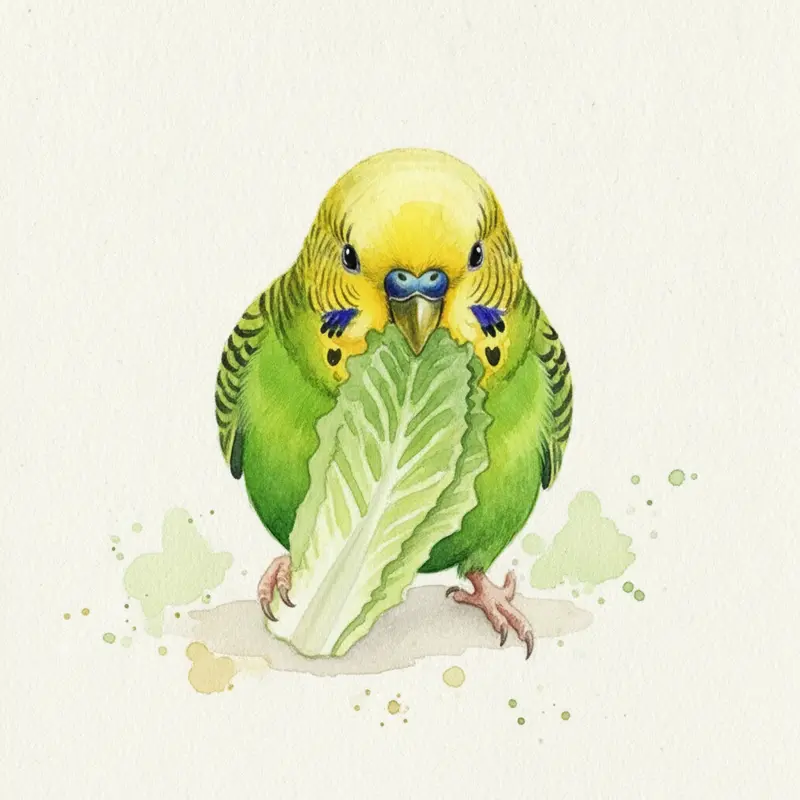
Caution: lettuce requires care for your bird.
The answer depends on the type of lettuce. Dark, leafy varieties like romaine, green leaf, and red leaf are safe and genuinely useful for birds — they add gentle hydration plus vitamin A, vitamin K, and a little fiber. Iceberg lettuce should be avoided: it is over 95% water, has almost no nutrition, and can cause loose droppings. Whatever the type, lettuce is a supporting player, not a staple — offer a few small torn pieces a few times a week as part of a varied diet, and reach for even darker greens like kale or chard when you can.
The Lettuce Spectrum: Best to Avoid
The single most useful thing to know is that “lettuce” is not one food. For birds, the dark leafy types are a worthwhile treat, while pale, crunchy iceberg is the one to skip.
Good in moderation:
- Romaine lettuce — The best of the lettuces. More fiber and vitamin A than most, sturdy leaves birds enjoy shredding, and well tolerated.
- Green leaf lettuce — Soft, mild, and nutritious; most birds accept it readily.
- Red leaf lettuce — Similar to green leaf, with extra antioxidants from the red pigment.
- Butterhead (Boston/Bibb) — Safe but softer and more watery than romaine, so keep portions extra small.
Avoid:
- Iceberg lettuce — Over 95% water, almost no fiber or nutrients. It can cause watery droppings while giving your bird nothing useful.
A simple rule works well: the darker the leaf, the better; the paler and crunchier, the worse. And if you want to go one step further, the best leafy greens for birds are not lettuces at all — kale, Swiss chard, dandelion greens, escarole, and parsley are richer in vitamin A and calcium. Lettuce is fine as part of the rotation, but it should not be the only green your bird ever sees.
Key Nutritional Facts: Lettuce (per 100g, raw)
- Romaine: 17 kcal, 1.8g fiber, 436mcg Vitamin A, 102mcg Vitamin K, ~95% water
- Green leaf: 15 kcal, 1.3g fiber, 370mcg Vitamin A, 126mcg Vitamin K, ~95% water
- Iceberg: 14 kcal, 1.2g fiber, 25mcg Vitamin A, 24mcg Vitamin K, ~96% water
- Note: iceberg has 10-17x less Vitamin A than romaine
Why Leafy Lettuce Can Be a Good Treat for Birds
Dark leafy lettuce sits in a nice spot for birds: low in sugar, hydrating, low in calories, and a source of the one nutrient pet birds are famously short of — vitamin A. Most pet birds live on seed-heavy diets that leave them low on vitamin A, and hypovitaminosis A is the most common nutritional deficiency avian vets see. Leafy greens like romaine are a simple, natural way to help top it up.
The upsides of dark leafy lettuce for birds include:
- Vitamin A (as beta-carotene) — Supports healthy skin, feathers, eyes, and the linings of the respiratory and digestive tracts. Romaine and other dark leaves are a good natural source.
- Vitamin K — Important for healthy blood clotting.
- Gentle hydration — At roughly 95% water, lettuce adds moisture. (This is also its main risk in excess — see below.)
- Very low sugar — Unlike fruit, leafy lettuce has almost no sugar, so it can appear more regularly in the diet.
- Enrichment — A washed leaf clipped to the cage bars gives a bird something to grip, tear, and shred, which helps break up dietary boredom.
The key word throughout is moderation. Lettuce complements a balanced diet; it is not a source of complete nutrition on its own. A bird’s body is small, and a leaf of watery lettuce is a lot of water relative to its size.
The Watery-Dropping Warning
The one real catch with lettuce is its water content. Because leafy greens are around 95% water, a bird that eats too much — or that is not used to fresh greens — can develop loose, watery droppings. That is uncomfortable, and if it goes on it can lead to dehydration in a small bird.
This is not a reason to avoid dark leafy lettuce, only a reason to keep portions modest and introduce it gradually:
- Start with a small piece and offer it every few days, not in large daily helpings.
- Watch the droppings after the first few servings. A little more liquid than usual right after a juicy green is normal; persistently watery droppings are a cue to cut back.
- Iceberg is the worst offender here — highest water, lowest fiber — which is another reason to skip it in favor of romaine.
- If droppings stay watery for more than a day, or your bird seems unwell, contact an avian veterinarian.
Portion Sizes by Bird Species
Because lettuce is a low-sugar vegetable rather than a sugary fruit, it can appear regularly — but it is still one part of a varied fresh-food share, not a bowlful. Aim for vegetables and greens at roughly 15-20% of the diet, fruit at 10-15%, and pellets as the 60-70% base.
Small birds (budgies, parakeets, finches, canaries, lovebirds):
- A small piece of a dark leaf, roughly the size of the bird’s head, torn into shreds
- A few times per week
- Clip a leaf to the bars so tiny beaks can shred it at their own pace
Medium birds (cockatiels, conures, quaker parrots, caiques):
- A couple of torn pieces or a half-leaf of romaine
- A few times per week
- A whole leaf clipped to the cage doubles as foraging enrichment
Large birds (African greys, amazons, macaws, cockatoos, eclectus):
- A leaf or two of romaine, torn or offered whole to shred
- A few times per week
- Big parrots enjoy stripping a sturdy romaine leaf; rotate with kale and chard for more nutrition
Can Specific Birds Eat Lettuce?
The portions above give the numbers, but the most common question is whether lettuce is safe for a particular kind of bird. The answer is yes for dark leafy types across the board — the difference is portion size and how much water their small body can handle.
Can Parrots Eat Lettuce?
Yes. Large parrots (African greys, amazons, macaws, cockatoos) can eat a leaf or two of romaine or other dark leafy lettuce a few times a week, washed and torn or offered whole to shred. Leafy greens are especially worthwhile for parrots because so many are kept on seed-rich diets that leave them short of vitamin A — African greys in particular are prone to vitamin A and calcium issues. For those, rotate in even richer greens like kale, chard, and dandelion greens alongside the lettuce.
Can Budgies Eat Lettuce?
Yes, in small amounts. Budgies (parakeets) can have a small piece of romaine or leaf lettuce, torn up, a few times a week. Because they are tiny (30-40g), the water content matters more, so keep portions small and watch the droppings after the first few servings. Skip iceberg entirely — it offers a budgie nothing. Many budgies love shredding a leaf clipped to the cage bars, which makes lettuce a nice low-sugar enrichment treat.
Can Cockatiels Eat Lettuce?
Yes. Cockatiels can have a couple of torn pieces or a half-leaf of romaine a few times a week. Cockatiels can be suspicious of new foods, so try clipping a leaf to the bars where they can investigate it at their own pace, or mix a little shredded lettuce into a familiar chop. Give it a week or two of repeated exposure before deciding your bird dislikes greens — many cockatiels warm up once it feels familiar.
Can Conures and Lovebirds Eat Lettuce?
Yes. These lively parrots usually take to leafy greens readily. Conures can have a couple of torn pieces of romaine, and lovebirds a small piece of a dark leaf, a few times a week. Their playful, chewy nature makes a clipped lettuce leaf a good enrichment treat. As always, choose dark leafy varieties over iceberg, and rotate with other greens for variety.
How to Prepare Lettuce for Your Bird
A little preparation keeps lettuce safe and cuts the water risk:
Step 1: Choose a dark, leafy variety. Reach for romaine, green leaf, or red leaf — never iceberg. Pick crisp, fresh leaves with no sliminess, browning, or wilting.
Step 2: Wash it thoroughly. Rinse well under cool running water to remove pesticide residue and any grit. Buy organic where you can, since leafy greens can carry surface pesticides.
Step 3: Tear, do not drench. Tear the leaf into bird-sized pieces or offer a whole leaf clipped to the bars. There is no need to add water — the leaf already holds plenty. Serve it plain: no dressing, oil, salt, or seasoning.
Step 4: Remove uneaten lettuce promptly. Take out any wilted or uneaten leaf within a few hours (sooner in warm weather), since fresh greens spoil and can grow bacteria. If your bird stashes food, check for hidden soggy pieces.
Lettuce and Greens to Handle With Care
Most lettuce questions are really about picking the right green. A quick guide beyond plain lettuce:
- Iceberg lettuce — Skip it. All water, no nutrition, and the most likely to cause loose droppings.
- Raw spinach — Safe in small amounts but high in oxalates, which can bind calcium; offer only occasionally and not as a main green, especially for calcium-sensitive species.
- Dressed or bagged salad mixes — Avoid any lettuce that comes with dressing, croutons, or seasoning. Only plain, washed leaves are appropriate.
- Better-than-lettuce greens — Kale, Swiss chard, dandelion greens, escarole, endive, mustard greens, and parsley are all more nutritious than lettuce and make excellent rotations.
ZuPreem FruitBlend Bird Food for Medium Birds
A nutritionally complete pelleted diet that should form the foundation of your bird's meals — and, importantly, one that is fortified with vitamin A. Fresh leafy greens like romaine make an excellent natural supplement, but treats and vegetables sit on top of solid daily nutrition, not in place of it. Designed for cockatiels, conures, lovebirds, and similar medium-sized species.
$18.99 View on AmazonAs an Amazon Associate, we earn from qualifying purchases.
Signs Your Bird Has Eaten Too Much Lettuce
Lettuce is not toxic, but overdoing it — especially with watery types — can cause mild problems:
- Loose or watery droppings after a large serving of greens
- Filling up on lettuce and ignoring pellets and other vegetables
- Reduced appetite for the balanced diet the bird actually needs
These are minor and resolve once you return to modest portions and offer more nutrient-dense greens. Lettuce should complement a pelleted or well-balanced diet, not replace it. If droppings stay watery for more than a day, or your bird seems lethargic or fluffed up, consult an avian veterinarian.
Frequently Asked Questions
Can baby birds eat lettuce?
Hand-fed baby birds should stay on their formula until they are fully weaned and eating solid food on their own. Once weaned, a tiny piece of washed, torn romaine can be one of the greens you introduce, watching closely for any change in droppings. Start small and go slowly.
Is lettuce or spinach better for birds?
Both have a place, but neither should be the only green. Dark leafy lettuce like romaine is a safe, hydrating everyday green. Spinach is more nutrient-dense but high in oxalates, which can interfere with calcium absorption, so offer it only occasionally and in small amounts. The best approach is to rotate several greens — romaine, kale, chard, and dandelion greens — rather than relying on any single one.
Can birds eat lettuce every day?
It is better not to make lettuce a daily staple. A few servings a week, as part of a varied fresh-food share, is plenty. Because lettuce is so watery, daily helpings can lead to loose droppings and can crowd out more nutritious greens and the pelleted base of the diet.
My bird’s droppings got watery after eating lettuce — is that a problem?
A one-off change in droppings right after a juicy green is usually just the extra water passing through and is not an emergency. Cut the portion back and switch to a slightly less watery green like romaine over iceberg. If watery droppings persist for more than a day, or your bird seems unwell, contact an avian veterinarian.
More Foods Your Bird Can and Cannot Eat
Wondering what else is safe for your bird? Check out our other bird food safety guides:
- Can My Bird Eat Apples? — Safe flesh, but the seeds are toxic
- Can My Bird Eat Carrots? — A vitamin A powerhouse for feathered friends
- Can My Bird Eat Broccoli? — A calcium-rich veggie, best in moderation
- Can My Bird Eat Celery? — A hydrating, low-sugar treat, leaves first
- Can My Bird Eat Cucumber? — A safe, low-sugar, hydrating treat
- Can My Bird Eat Strawberries? — A safe, vitamin-rich fruit they love
- Can My Bird Eat Bananas? — A tropical treat they will go crazy for
- Can My Bird Eat Grapes? — Safe unlike dogs, but watch the pesticides
- Can My Bird Eat Rice? — Cooked and plain, a safe everyday grain
- Can My Bird Eat Avocado? — A deadly fruit for your feathered friend
- Can My Bird Eat Chocolate? — Absolutely not, here is why
- Can My Bird Eat Peas? — A high-protein veggie they can forage
References & Authoritative Sources
The information in this guide is informed by leading veterinary organizations and toxicology resources. For your pet's specific situation, always consult a licensed veterinarian.